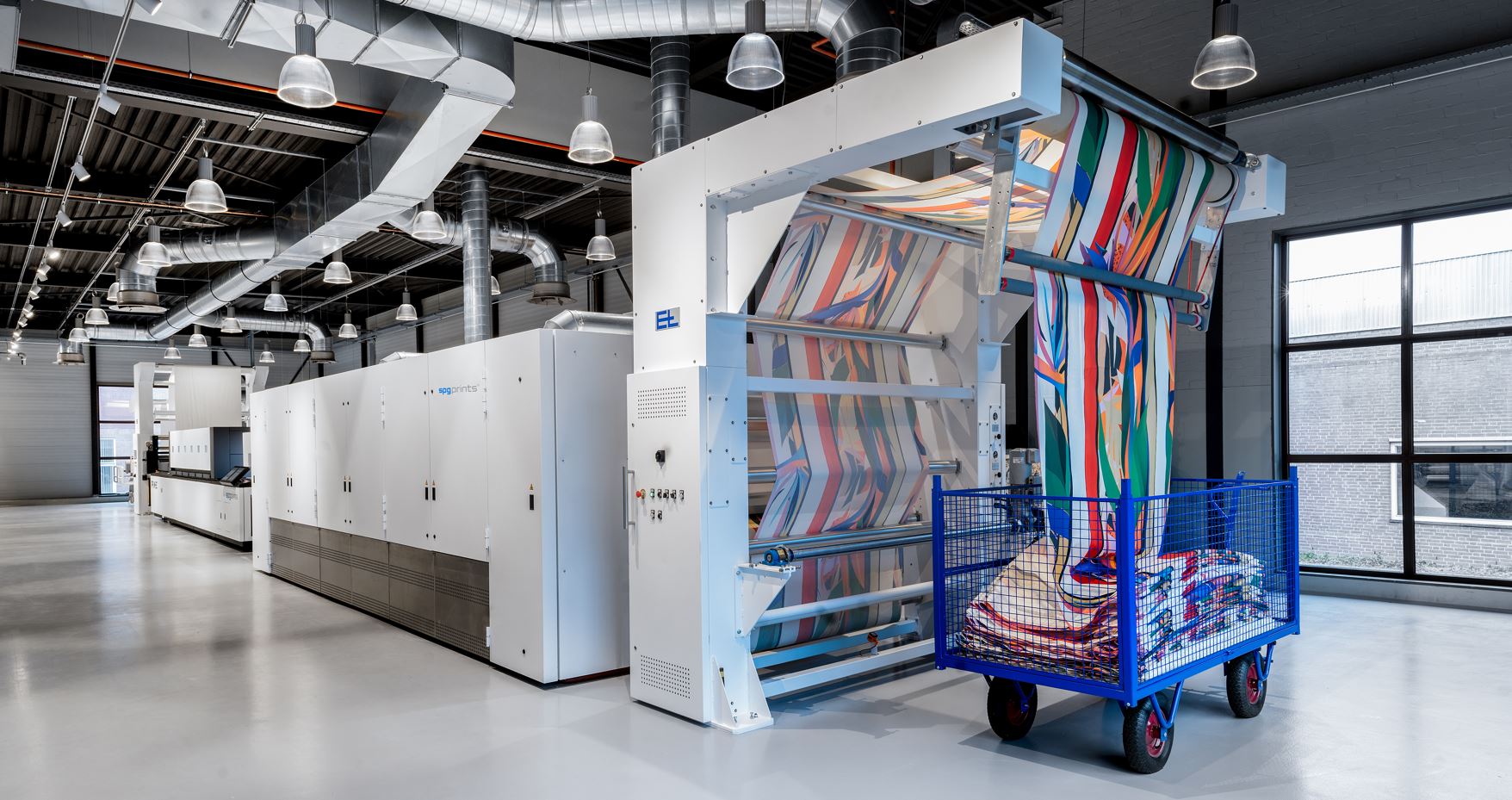
High-throughput hardware engineered for seamless integration into digital print production workflows.
In the highly competitive landscape of industrial manufacturing and personalized product decoration, the transition from fragmented traditional setups to a unified, optimized print production workflow is no longer a luxury—it is an absolute necessity. Modern print orchestration links every phase of production: raw graphic file preflighting, color separation, substrate-specific ink formulation, physical deposition, and post-cure finishing.
As global markets demand faster turnaround times, smaller run lengths, and hyper-customization, standard mechanical setups face massive structural bottlenecks. A reliable supplier and exporter does not merely deliver mechanical hardware; they establish robust technical systems capable of synchronizing hardware architectures, Raster Image Processing (RIP) software, and mechanical output parameters to ensure zero-defect operations.
Shenzhen Colvanta Print Co., Ltd. is a professional digital printing machine manufacturer based in Shenzhen, China, specializing in advanced DTF, DTG, and UV DTF printing equipment. With a strong focus on innovation, efficiency, and reliability, the company provides comprehensive printing solutions for global customers in the garment, advertising, and customized product industries.
Colvanta Print integrates cutting-edge technology with practical application needs, offering a wide range of machines designed for high-quality textile printing, heat transfer production, and multi-surface customization. Its product line supports various materials including cotton, polyester, blends, leather, and hard surfaces, enabling businesses to expand their product offerings with flexibility.
Beyond equipment supply, the company delivers end-to-end solutions, covering technical support, workflow optimization, color management, and after-sales service. Whether for startups, print shops, or large-scale manufacturers, Colvanta ensures stable performance, user-friendly operation, and consistent output quality.
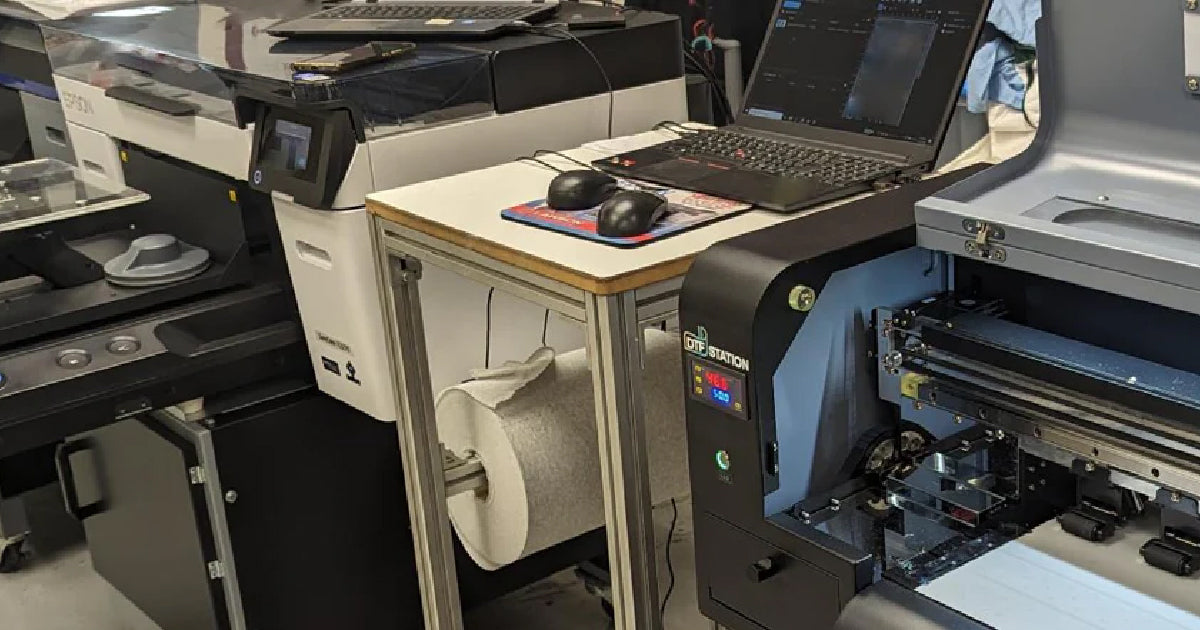
Committed to continuous R&D and strict quality control, Shenzhen Colvanta Print Co., Ltd. aims to help clients reduce production costs, improve efficiency, and scale their printing business in a competitive market. With global export experience and customer-oriented service, Colvanta Print is dedicated to becoming a trusted partner in the digital printing industry.
Mapping the end-to-end hardware-software pipeline from high-fidelity digital design input to automated post-cure validation.
Integration of industry-standard RIP engines (such as CADlink Digital Factory or SAi Flexi) ensures precise icc-profile color matching, automated spot-color generation for white ink, and efficient nesting to maximize film/substrate utilization.
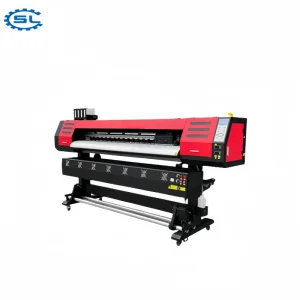
Deploying multi-channel piezo printheads (e.g., Epson i3200 Series) configured with dynamic droplet size control. Real-time white ink circulation and degassing elements prevent printhead nozzles from sedimentation-induced dropouts.
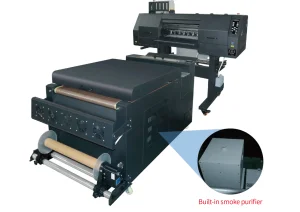
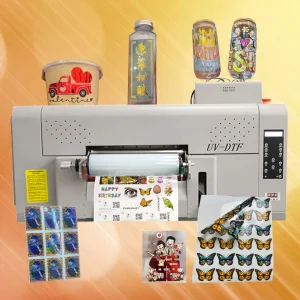
In DTF workflows, printing is followed by inline powdering, electrostatic dust shaking, and dual-zone IR belt curing. For UV DTF, continuous laminator synchronization enables instant post-curing adhesion without manual film alignment.
Decentralized customized workflows require distinct hardware architectures. Choose the workflow fit for your operation.
| Workflow Technology | Ideal Production Scale | Primary Substrates Supported | Key Automation Hardware Integrations | Yield Metric Focus |
|---|---|---|---|---|
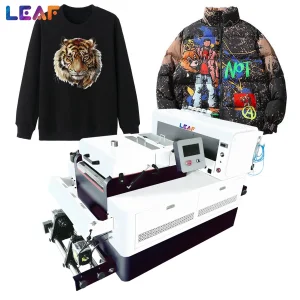
| Roll-to-Roll DTF (A3/60cm) | Medium to High Batch Run Apparel | Cotton, Blends, Polyester, Nylon, Canvas | Automatic powder recirculators, IR heat belts | Wash fastness, hand-feel texture optimization |
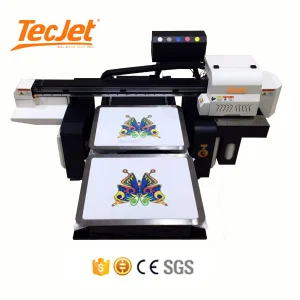
| Industrial DTG | High-Mix, Short-Run Direct Prints | 100% Cotton, High-Cotton Blends, Denim | Dual-platen pneumatic jigs, inline pretreat sprayers | Breathability, complex photographic gradients |
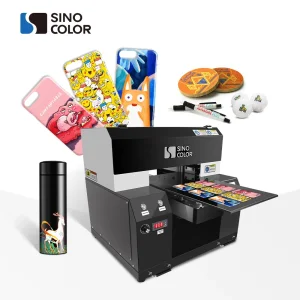
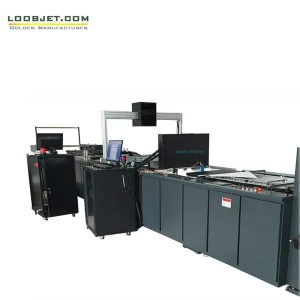
| UV DTF & Hybrid Flatbed | Hard Surfaces, Rigid Signage, Industrial Coding | Glass, Metal, Acrylic, PVC, Wood, Ceramics | UV LED curing array (395nm), dual-head varnish overlays | Scratch resistance, 3D textured tactile finishes |
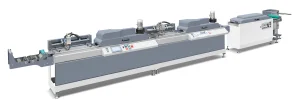
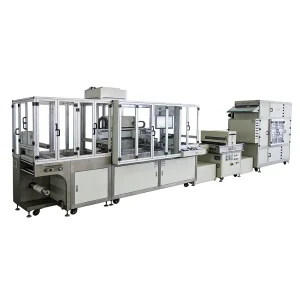
| Roll-fed CCD Screen Printing | Ultra-High Speed Monocolor Labeling | Satin, Lanyards, Elastic Bands, PVC Ribbons | CCD camera positioning sensor, infrared tunnel dryers | Extreme throughput, edge sharpness on narrow webs |
Shenzhen's status as a global digital electronics and high-precision manufacturing capital allows manufacturers like Colvanta Print to leverage unparalleled supply chain ecosystems. Every stage of production—from the sourcing of structural steel gantries, linear guides (such as Japanese THK systems), to high-speed Hoson boards and stepper motors—benefits from an integrated, hyper-local network.
This localized cluster results in unprecedented R&D prototyping speeds. While manufacturers elsewhere struggle with weeks of lead time for component sourcing, Colvanta can iterate, test, and apply updates within hours. This efficiency directly converts to cost savings, high components availability, and shorter lead times for international distributors.
Furthermore, rigid quality control standards are integrated into this supply loop. Components undergo intense stress testing—including printhead vibration tests, power supply fluctuation tolerances, and chassis structural alignment tests—before leaving the factory floor, ensuring a remarkably low out-of-box failure rate.
How digital print workflows resolve localized regulatory, economic, and regional demands across varying industries.
In North America, high labor costs demand automated print workflows. E-commerce print-on-demand fulfillment centers deploy roll-to-roll DTF systems integrated with automated barcode ordering. Minimizing labor requirements and relying on preflight hot-folders allows regional print shops to fulfill same-day custom orders profitably.
European printing operations require strict adherence to OEKO-TEX® standards and RoHS directives. Colvanta Print coordinates its supply line to support eco-friendly water-based polyurethane inks and biodegradable TPU powders, enabling printers to pass local VOC emission tests and gain regional safety certifications.
With massive textile production hubs throughout Vietnam, Indonesia, and Bangladesh, regional manufacturers utilize localized digital screen print workflows. Adding 2-color high-speed lanyard printers and narrow-web fabric stamp machines enables traditional garment lines to transition effortlessly into brand labeling.
The next generation of print production workflows is heavily centered around mechanical automation, ecological sustainability, and machine-learning diagnostics. As a pioneer in the exporting sector, Shenzhen Colvanta Print is investing in the integration of AI-driven RIP software that analyzes raster inputs to automatically predict the optimal ink density, reducing ink consumption by up to 20% without sacrificing vibrancy.
In terms of hardware, the market is shifting toward inline single-pass multi-layer printing. Instead of separate printing and lamination stages, new hybrid UV DTF systems will soon feature inline dry-transfer application units, delivering instantaneous hard-surface decoration options.
On the industrial front, IoT-enabled diagnostic modules will monitor printhead status, heating temperatures, and humidity in real-time, sending maintenance alerts directly to technicians to avoid unplanned downtime.
2025 Standard: Manual preflighting, localized heating controls, traditional ICC profiling.
2027 Projections: Algorithmic ink deposition profiles, integrated cloud diagnostics, remote color matching calibration.
2030 Target: Full zero-emission ink solutions, zero-waste smart nesting, dynamic inline spectrophotometry.
Expert technical insights to optimize print operations, mechanical efficiency, and ink configurations.
DTF (Direct-to-Film) printing utilizes water-based textile inks which require printheads (such as Epson i3200-A1) optimized for aqueous fluids with high elasticity. UV DTF, conversely, utilizes UV-curable monomers and varnishes that require specialized printheads (like Epson i3200-U1) equipped with UV-resistant seals and dampers to prevent chemical corrosion. UV DTF also relies on an adjacent UV-LED lamp (typically 395nm wavelength) to cure the ink immediately upon deposition.
We deploy standardized ICC profiling workflows in tandem with spectrophotometric measurements. Every exported printer is pre-calibrated for specific media types. Furthermore, our machines support industry-standard RIP engines, enabling technicians to construct customized color profiles matching local humidity, temperature, and substrate variables.
Because white digital inks contain heavy titanium dioxide particles, they settle quickly. To combat this, our workflows integrate active white ink circulation pumps, automatic timed stirring mechanisms inside the bulk tanks, and micro-filter elements before the printhead manifold. Daily head purges and weekly dampening checks are recommended to sustain reliable nozzle performance.
All Colvanta digital printing platforms are constructed using UL/CE-certified electrical components. Our frames and mechanical assemblies strictly follow EU machinery directives, and we offer optional components compliant with FCC (US) and CSA (Canada) standards for regional deployment.
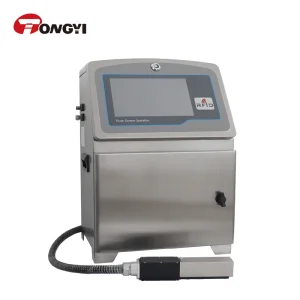
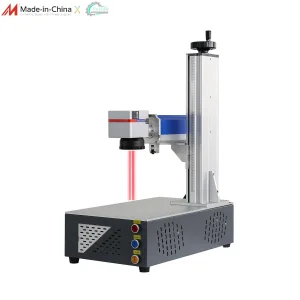
High-capacity post-processing, marking, and water purification units designed for modern factories.
 Colvanta Print