Why Is DTF Printing Good for Mass Production?

Time:2026-10-20 Author:Liam
0%

Is dtf printing good for mass production? For many apparel businesses, the answer is yes, but only when the workflow is properly controlled. Direct-to-film printing can produce colorful transfers across cotton, polyester, blends, hoodies, uniforms, and promotional garments. It also handles short runs and repeated orders without screen setup for every design. That flexibility matters when customer demand changes weekly.

Josh Ellsworth, President of GroupeSTAHL North America and an experienced garment-decoration specialist, has described DTF as “a powerful production tool when matched with the right workflow.” His point is practical. A modern DTF line can print film continuously, apply adhesive powder, cure transfers, and press garments with consistent positioning. One operator may prepare hundreds of transfers during a production shift. The visual details are clear: organized film rolls, measured powder, stable curing temperatures, and labeled garment stacks.

However, DTF is not automatically the fastest method for every factory. Ink costs, film handling, powder waste, curing time, and heat-press capacity can limit output. Small process errors may create weak adhesion, rough texture, or color variation. That is easy to overlook.

The real question is not only “is dtf printing good for mass production,” but whether the equipment, staff, quality checks, and order volume support it. Reliable production requires testing wash durability, monitoring humidity, and recording press settings. DTF can scale impressively. It still needs discipline.
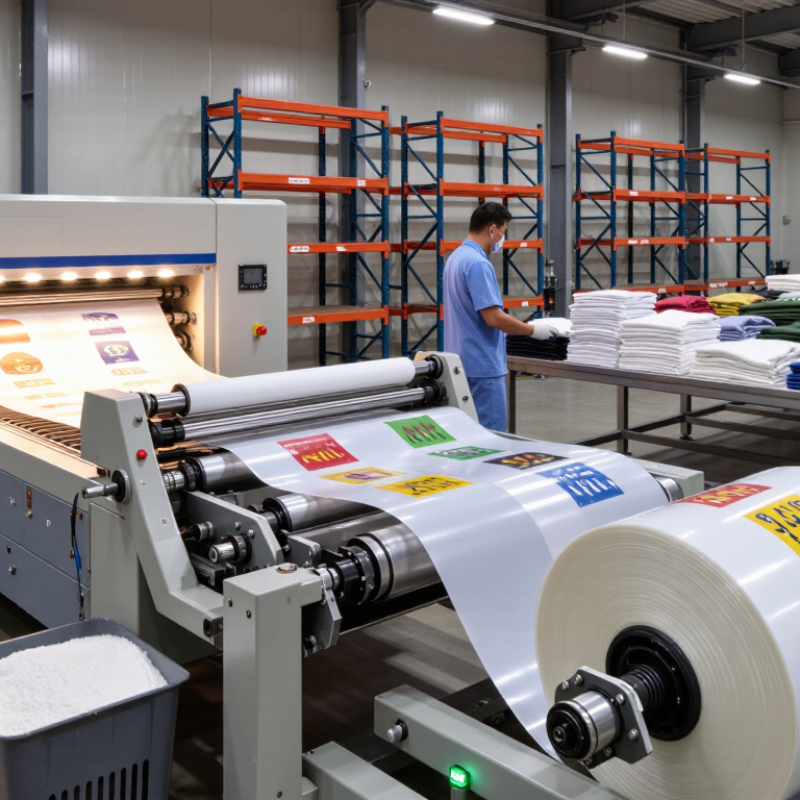
Why Is DTF Printing Good for Mass Production?

What Is DTF Printing and How Does It Work?

Direct-to-film (DTF) printing transfers a digital design onto a coated PET film. The printer lays down color ink, usually with a white ink layer underneath. Adhesive powder is then applied to the wet print. Heat cures the powder into a flexible bonding layer. A heat press transfers the finished image onto cotton, polyester, blends, and other fabrics.

The workflow is relatively compact. Artwork enters RIP software, where color, white-ink density, and print order are adjusted. The film moves through printing, powdering, curing, and transfer. In production, operators still check nozzle condition and powder coverage repeatedly. Small failures become expensive in batches. White ink can settle. It is not magic.

Grand View Research valued the global digital textile printing market at about 5.5 billion US dollars in 2022 and projected strong growth through 2030. Smithers has also reported continuing expansion in digital textile applications, driven by short runs, customization, and reduced setup waste. These figures cover digital textile printing broadly, not DTF alone, so they should not be treated as exact DTF forecasts. Still, they explain why factories are testing this process for mass production.

DTF supports repeat orders because the design file can be reproduced without screens or lengthy plate preparation. It also reduces the need for large fabric inventories. However, throughput depends on curing capacity, film quality, labor, and heat-press consistency. A fast printer cannot correct poor powder adhesion. Practical results improve when test transfers, wash checks, and color records are built into the workflow.

How DTF Printing Supports High-Volume Production

Why Is DTF Printing Good for Mass Production?

How DTF Printing Supports High-Volume Production

DTF printing supports high-volume production by separating artwork preparation from garment application. Designs are printed onto film, coated with adhesive powder, cured, and stored for scheduled pressing. This creates a practical buffer when orders arrive in waves. Operators can prepare transfers in batches, then apply them to shirts, hoodies, bags, or uniforms with consistent pressure and heat. Production becomes easier to organize.

The process also handles detailed artwork, gradients, and short runs without screens for every color. That flexibility helps workshops serve varied orders without changing the whole setup. Still, speed is not automatic. Film alignment, powder coverage, curing temperature, and press timing require documented checks. A small error can repeat across hundreds of pieces. I have found that sample testing saves time, although it can feel slower at the start. Color matching may also need adjustment between fabrics.

Tips: Keep a production log for temperature, pressure, curing time, and film batches. Inspect the first transfer before releasing a full run. Store printed films flat, clean, and protected from moisture. Assign one person to verify artwork size and placement. Leave realistic space for reprints. Machines need breaks, too.

Why DTF Printing Delivers Consistent Quality at Scale

Direct-to-film printing supports mass production because each transfer follows a repeatable workflow. Artwork is printed onto film, coated with adhesive powder, cured, and heat-pressed onto garments. When temperature, pressure, and dwell time remain stable, operators can reproduce the same design across hundreds of pieces. That matters.

Consistent quality begins before printing. Production teams should inspect files, confirm color settings, and test film adhesion on the selected fabric. A simple nozzle check can prevent streaks across an entire batch. Operators also record curing temperature, press pressure, and pressing time. These details create traceability when a customer questions a shipment. Clear inspection points make training easier for new staff.

DTF printing is not flawless. Dark garments, textured fabrics, and rushed curing can still produce uneven edges or weak adhesion. Human judgment remains. Experienced operators examine the first few garments, check small lettering, and perform wash tests before releasing a large order. They may adjust pressure or curing time after observing the fabric, rather than trusting fixed settings blindly. I have found that this pause often prevents expensive rework. However, consistency can decline when equipment maintenance is ignored or different operators use personal settings. Written procedures help, but regular calibration and honest quality reviews are still necessary for dependable production at scale.

How DTF Printing Reduces Costs and Material Waste

For mass production, DTF printing can reduce costs by simplifying artwork changes and limiting setup time. Designs are printed onto film, coated with powder, cured, and transferred with heat. This workflow avoids cutting large fabric sections for every color variation. A small transfer sheet can hold multiple logos, names, or front graphics. That matters when orders contain many sizes.

In a busy production room, operators can arrange several designs on one film sheet. They use only the transfer area, while unused film remains measurable and manageable. Compared with screen printing, DTF often needs fewer screens, less ink preparation, and less washing water. Fewer setup stages can lower labor costs during short runs and repeated orders. Material planning still requires discipline. Poor nesting creates empty spaces, while excess powder increases cleanup and disposal needs.

Experienced teams check nozzle condition, powder coverage, curing temperature, and press pressure before scaling production. Small test transfers reveal weak adhesion, muddy edges, or color shifts before hundreds of garments are pressed. Test batches matter. This prevents larger losses, although testing consumes some film and powder. DTF is not waste-free. It does not eliminate packaging waste, failed garments, or unused transfer space. Operators may adjust artwork spacing after reviewing real production samples. The most reliable savings come from accurate forecasting, efficient layouts, and consistent quality checks.

Why Is DTF Printing Good for Mass Production? - How DTF Printing Reduces Costs and Material Waste

Production Dimension DTF Printing Traditional Screen Printing Mass-Production Benefit
Minimum Order Flexibility 1 piece and above
Suitable for samples, small batches, and large runs.
Usually higher
Setup costs make very small orders less economical.
Orders can be produced according to actual demand, reducing excess inventory and unsold garments.
Artwork Setup No screens or color separations are required for each design. Separate screens are normally prepared for each ink color. Lower preparation labor and fewer setup materials are required when designs change frequently.
Typical Setup Time Approximately 10–30 minutes for file preparation, film printing, powder application, and curing. Often 30–90 minutes or more, depending on the number of colors and screen preparation needs. Shorter setup helps production lines switch between designs faster.
Color Capability Full-color artwork, gradients, fine details, and photographic images can be reproduced in one transfer. Each additional color generally requires another screen and additional registration work. Complex artwork can be produced without adding multiple screens or lengthy color-registration steps.
Design Changeover Digital files can be changed without replacing screens. New or substantially changed artwork may require new screens and setup. Useful for personalized orders, seasonal collections, and many designs in the same production schedule.
Material Waste Sources Main waste sources are film trimming, unused transfer sections, powder residue, and test prints. Waste may include screens, emulsion, stencil chemicals, ink mixtures, cleaning materials, and test garments. Digital, on-demand production can reduce setup waste, especially when producing multiple low-volume designs.
Ink and Consumable Management Ink, film, and adhesive powder are dispensed digitally and can be prepared for the required quantity. Ink is often mixed and loaded for a specific job; leftover ink may not always be reusable. More controlled material usage can lower consumable losses and simplify inventory planning.
Labor Requirement per Design Fewer manual steps are needed after the artwork file is approved. Additional manual steps may include screen coating, exposure, alignment, printing, and screen cleaning. Labor savings become more significant when a production schedule contains many different designs.
Production Consistency Digital files support repeatable placement and color output when the printer is properly calibrated. Consistency depends more heavily on screen condition, ink viscosity, pressure, registration, and operator technique. Repeatable digital workflows can reduce reprints caused by setup variation.
Best Economic Use Case Mixed designs, personalized products, short-to-medium runs, and full-color graphics. Very large quantities of the same simple design with limited colors. DTF is especially cost-effective when flexibility, reduced setup, and lower design-specific waste are priorities.
Overall Cost Control Lower setup-related cost
Fewer screens, less manual preparation, and less overproduction.
Lower unit cost at high repetition
Efficient when one design is printed in very large quantities.
DTF can reduce total order cost when the production mix includes multiple designs or variable quantities.
Note: The figures and comparisons represent typical production ranges and workflow conditions. Actual costs, setup times, waste levels, and output capacity vary according to artwork size, garment type, equipment configuration, operator skill, maintenance, and order volume.

Which Products and Fabrics Are Suitable for DTF Printing?

DTF printing suits many products because it transfers detailed designs onto fabric without cutting separate vinyl layers. In production work, I find it especially practical for cotton T-shirts, polyester sportswear, and cotton blends. It also suits hoodies, tote bags, and work uniforms. Small logos stay sharp, while full-color artwork handles gradients and fine lettering. This flexibility helps when sizes and garment colors change.

Cotton is usually the easiest starting point. Its smooth surface accepts the adhesive layer evenly, creating a soft but visible print. Polyester can also perform well, although heat and dye migration require careful control. A test press helps prevent unwanted color shadows on bright garments. Blended fabrics need attention too. A 60/40 cotton-polyester shirt may print beautifully, yet its texture and stretch can change the final feel.

Flat products are the most reliable, including T-shirts, sweatshirts, aprons, pillow covers, and canvas bags. Caps, socks, waterproof jackets, and textured materials are possible, but results vary with pressure and surface shape. I would not approve bulk production from one sample alone. Wash testing, stretch testing, and bright-light inspection reveal weak edges or poor adhesion. Even experienced operators sometimes overlook moisture or fabric softener. That mistake can reduce durability. DTF is versatile, but it is not magic. Some fabrics still need another decoration method.

FAQS

How can DTF printing reduce production costs?

It simplifies artwork changes and reduces setup time. A small film sheet can hold several designs. Fewer screens, less ink preparation, and less washing water may lower labor costs. Savings depend on careful planning.

Does DTF printing eliminate material waste?

No, it only helps control waste. Unused film remains after arranging designs. Poor spacing creates empty areas and wastes transfer material. Excess powder also increases cleanup and disposal.

Which fabrics usually work well with DTF printing?

Cotton is often the easiest starting point. Polyester and cotton blends can also work well. Heat settings require extra attention on polyester. Fabric texture can change the print’s final feel.

Which products are suitable for DTF transfers?

Flat products are usually the most reliable. Suitable examples include T-shirts, hoodies, aprons, tote bags, and pillow covers. Work uniforms and sportswear may also perform well. Caps and textured items need more testing.

Can DTF printing handle detailed and colorful designs?

Yes, it can reproduce gradients, fine lettering, and small logos. A single transfer may include several colors. Sharp artwork still depends on clean files and proper curing. Tiny details can weaken after washing.

What should operators check before mass production?

They should check nozzle condition, powder coverage, curing temperature, and press pressure. A small test transfer can expose weak adhesion or muddy edges. Inspect the print under bright light. Do not trust one quick sample.

Why are test batches important?

Test batches reveal color shifts before hundreds of garments are pressed. They also show weak edges, poor adhesion, or uneven surfaces. Testing uses some film and powder. That cost is usually smaller than a failed bulk order.

What problems can occur with polyester and blended fabrics?

Polyester may show unwanted color shadows after pressing. Blended fabric can stretch differently from pure cotton. Moisture and fabric softener may reduce adhesion. I have seen assumptions fail here.

How can teams improve film usage?

Arrange logos and graphics closely on each sheet. Measure unused areas after every production run. Review real samples before changing artwork spacing. Perfect layouts are difficult. Better layouts are realistic.

Conclusion

DTF printing transfers digitally printed designs onto a special film, applies a layer of adhesive powder, and uses heat to bond the image onto fabric. This streamlined process eliminates the need for screens and supports quick design changes, making it suitable for custom orders and large production runs. But is dtf printing good for mass production? Yes, because it can handle repeated printing efficiently while maintaining sharp details, vibrant colors, and consistent results across many items.

DTF printing also helps reduce setup time, labor requirements, and material waste, especially when producing multiple designs or smaller batches within a larger order. It works well on a broad range of products and fabrics, including cotton, polyester, blends, garments, bags, and other textile items that can withstand heat pressing. With flexible production, reliable quality, and efficient material usage, DTF printing offers a practical solution for businesses seeking scalable and cost-conscious decoration methods.

Liam

Liam

Liam is a dedicated marketing professional with a profound expertise in the industry, where he excels at highlighting the unique advantages of our core products. With a keen understanding of market trends and consumer needs, Liam frequently updates our company’s professional blog, providing......