Choosing between direct-to-film (DTF) and direct-to-garment (DTG) is not just a question of print quality. It affects setup time, fabric choices, order size, and how a finished shirt feels in the hand. Grand View Research valued the global custom T-shirt printing market at about $4.3 billion in 2022 and projected an 11.1% compound annual growth rate from 2023 to 2030. That forecast signals expanding demand, but it does not prove that one printing method is better. The right choice still depends on the garment, artwork, and production workflow.
So, when should you use dtf instead of dtg? DTF is often worth considering for mixed-fabric orders, small batches, or artwork with fine details that must transfer across several garment types. Picture a shop pressing the same colorful logo onto cotton tees, polyester jerseys, and a canvas tote. DTG may be a stronger fit for cotton garments, especially when a soft, ink-into-fabric feel matters. Neither process wins every job. Not even close. Before committing, test a sample, check wash performance, and compare labor and material costs with your own equipment. A transfer that looks crisp on a sample may feel heavier than expected on a lightweight shirt. That detail is easy to overlook. The guide below breaks down seven practical situations, while noting where the choice depends on printer settings, fabric, and operator experience. Industry forecasts provide useful context, not a substitute for hands-on testing.
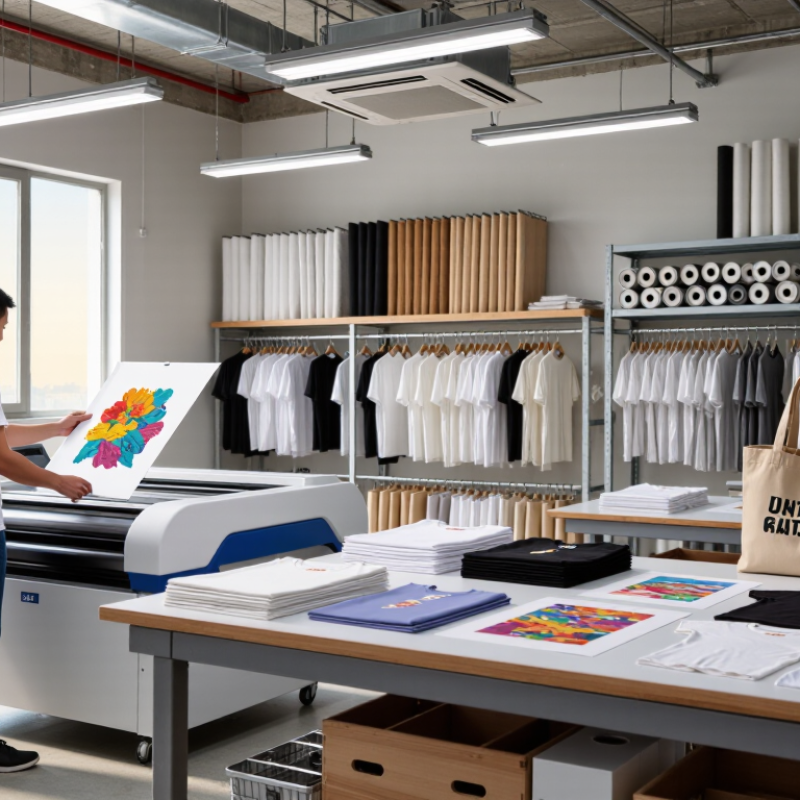
DTF is useful when one order includes cotton tees, polyester jerseys, and blended workwear. Its design separates printing from the garment: ink is applied to film, then transferred with heat and adhesive. That can make fabric choice less restrictive than direct-to-garment printing, which is generally most predictable on cotton-rich materials. Small runs, varied colors, and changing garment types? DTF can simplify the setup.
The material mix matters. Textile Exchange’s Materials Market Report 2024 estimates that polyester made up 57% of global fiber production in 2023, so polyester garments are hard to ignore. A DTF transfer may suit a sports shirt or canvas tote when direct printing is less reliable. Still, it is not a free pass. Nylon, water-repellent finishes, and heat-sensitive fabrics need careful testing; adhesive and press settings can change results. Check a sample for stretch, wash durability, and edge lift before producing a full batch. DTF can broaden fabric options, but it may leave a thicker feel than DTG. That trade-off is easy to miss.
Dark shirts expose weak coverage quickly. DTF uses a white ink base beneath colored inks, then transfers the printed film with heat and adhesive powder. This helps bright reds, fine outlines, and layered gradients stay visible on black cotton or mixed-fiber garments. DTG can also print white underbases, but dark garments often need pretreatment and careful curing. DTF can be more forgiving across varied fabrics. The trade-off is a slightly raised feel. Not always subtle.
Grand View Research’s 2024 report estimates the digital textile printing market at about USD 2.7 billion in 2023, with projected growth through 2030. That figure covers digital textile printing broadly, not DTF alone, so it signals market direction rather than proof that one method wins.
For production decisions, compare actual samples: inspect a fine white line on navy fabric, then stretch the print and wash-test it. AATCC TM61 provides a standardized accelerated laundering method for assessing colorfastness. Useful, but not a perfect stand-in for every home laundry routine.
I would not call DTF effortless: dense artwork can feel warm and plasticky, especially on lightweight shirts. When color coverage matters more than an almost ink-in-fabric feel, that compromise may be worthwhile.
DTF is often more efficient for small, detailed, or frequently changing designs because artwork is printed onto transfer film before it reaches the garment. Fine outlines, tiny lettering, and individual names can be arranged together on one sheet, then pressed onto garments as needed. This can reduce garment-by-garment setup and avoid pretreating each shirt, though powder curing and heat pressing still take time. DTG may remain the better fit for soft-feel prints on cotton. DTF can feel heavier, especially across large solid areas.
A real trade-off.
For custom orders, stored transfers help shops print ahead and finish pieces when orders arrive. Grand View Research valued the global digital textile printing market at $2.7 billion in 2022 and forecast 12.7% annual growth from 2023 to 2030. That figure covers digital textile printing broadly, not DTF alone, but it signals rising interest in flexible production. Efficiency still depends on artwork, fabric, and batch size; a tiny design is not automatically a faster job.
Tips:
Test a fine-line sample on the actual fabric. Check small text, adhesive coverage, wash performance, and feel before batching. If details fill in, simplify the artwork or adjust the print settings.
DTF earns its place when a design must cross fabric boundaries. Its adhesive layer bonds the printed film to the surface, so it can work on cotton, polyester, and blends where direct-to-garment printing may need more fabric-specific settings. Textile Exchange’s Materials Market Report 2023 estimates polyester made up 54% of global fiber production in 2022. That scale matters: polyester uniforms and sportswear are common, and a properly cured DTF transfer can hold up well on them. But no transfer is automatically durable. Heat, pressure, adhesive coverage, and wash care all affect the result.
For durability, test the actual garment rather than relying on a sample swatch. A well-pressed transfer should resist edge lifting after repeated washing and should not crack when the fabric is stretched. AATCC TM61 provides an accelerated method for evaluating colorfastness to laundering; AATCC TM8 assesses colorfastness to crocking. These tests do not prove DTF is better than DTG, but they offer useful ways to compare finished prints. On soft cotton tees, DTG may feel less raised. On slick polyester, DTF can be the safer starting point, though I would still test for dye migration.
Tips: Follow the film and adhesive supplier’s cure settings, then wash a sample inside out. Check the edges and stretch the print. Small flaws show up fast.
| Use Case | Material or Garment | Why DTF May Be the Better Choice | DTG Consideration | Durability Factors to Check |
|---|---|---|---|---|
| 1. Printing on polyester sportswear | Polyester jerseys, performance shirts, and other synthetic garments | DTF transfers can be applied to many polyester items, making DTF a practical option when direct-to-garment ink absorption is limited. | DTG is generally most straightforward on cotton-rich fabrics; results on polyester can depend on the specific ink and process. | Use a transfer and adhesive suitable for polyester. Follow temperature and pressing guidance to reduce dye migration and avoid heat damage. |
| 2. Decorating cotton-polyester blends | Common blended T-shirts and sweatshirts | A DTF transfer forms a printed layer on the fabric surface, which can provide consistent coverage across mixed-fiber content. | DTG performance can vary with the blend ratio, fabric construction, and pretreatment; prints may look less vivid on some blends. | Check adhesion and stretch on the actual blend. Excessive heat or an unsuitable adhesive can affect the garment or print. |
| 3. Printing on dark garments | Dark cotton, polyester, and blended apparel | DTF commonly uses an opaque white layer beneath the color design, helping graphics remain visible on dark materials. | DTG on dark garments also uses white ink, but typically requires garment pretreatment and careful curing. | Durability depends on proper ink or adhesive curing, adequate pretreatment where required, and following the care instructions. |
| 4. Working with varied fabric types in one order | Orders containing cotton, polyester, and blends | DTF can simplify production when one design must be transferred to several compatible fabric types. | DTG settings and preparation may need to change with fabric composition and garment color. | Confirm that the transfer system is approved for each material. A single press setting may not suit every fabric. |
| 5. Decorating bags and other non-shirt items | Canvas totes and selected fabric accessories | Transfers can be convenient for flat fabric items that are compatible with the transfer adhesive and heat-press process. | DTG is designed for direct printing on suitable garments and may be less convenient for some accessory shapes or constructions. | Inspect coatings, seams, and heat sensitivity. Test adhesion and wash performance on the exact item before production. |
| 6. Printing on nylon or coated fabrics | Selected nylon garments, bags, and coated textiles | DTF may work when the transfer adhesive is specifically compatible with the surface, offering an alternative to direct ink absorption. | DTG is not a universal solution for synthetic or coated surfaces, which may not absorb ink as expected. | Compatibility is essential: coatings and water-repellent finishes can prevent adhesion. Test first, and use lower-temperature methods when required. |
| 7. Prioritizing a surface-applied graphic | Garments where a defined, slightly raised print feel is acceptable | The transfer layer can create a continuous graphic surface that is less dependent on the fabric absorbing the ink. | DTG ink is deposited into the garment fibers and often has a softer feel on suitable cotton garments. | Neither method is automatically more durable in every situation. Correct application, fabric compatibility, design coverage, and care determine wear life. |
Important: These are general production considerations, not guaranteed wash-life rankings. Actual durability varies with fabric construction, transfer or ink system, pretreatment, curing, application settings, and laundering. Test the exact garment and process before a full run.
Choose DTF when an order mixes garment colors, fabric blends, or sizes. A single transfer workflow can simplify varied jobs. It also suits small logos, detailed artwork, and designs that need storing before application. Useful for urgent reprints. DTG often fits cotton-heavy orders, photographic artwork, and one-off samples where a soft, direct print matters. The best choice depends on the garment, artwork, and finishing time—not just the printer’s rated speed.
Grand View Research valued the global digital textile printing market at about $2.6 billion in 2023 and forecast 12.1% annual growth through 2030. This broad market figure does not prove DTF is better than DTG. It does show why production flexibility deserves attention. Compare actual throughput, including pretreatment, drying, transfer pressing, and routine cleaning. DTF can add film handling and peeling; DTG may need garment pretreatment and careful maintenance. That matters. Run a small, timed test with your own fabric and artwork before committing. Results can vary, and the test may expose inconvenient bottlenecks. I would not choose from sample prints alone.
A white ink layer sits beneath the colored inks. This helps reds, fine outlines, and gradients show on black or navy fabric. The print may feel slightly raised.
It can suit cotton and mixed-fiber garments. Test the actual fabric first, since results can vary. One sample is not enough for every order.
DTF can feel heavier, especially across large, solid areas. Direct printing may feel softer on cotton. Not always subtle.
Several small designs, names, or fine details can share one transfer sheet. This may reduce setup for individual garments, but powder curing and pressing still take time.
Yes. Transfers can be prepared ahead and applied when orders arrive. Storage helps with reprints, though it does not remove finishing work.
It may suit cotton-heavy orders, photographic artwork, or samples where a soft feel matters. The garment and finish time still need checking.
Print fine lines and small text on the actual fabric. Check adhesive coverage, stretch, feel, and wash performance. Worth testing.
No. Broad digital textile printing estimates describe the wider market, not DTF alone. Compare timed production tests instead. I would not decide from a sample print alone.
DTF printing can be a better choice than DTG when your work involves a wider range of fabrics, including materials that are difficult to print on directly. It is also useful for dark garments and designs with complex colors, since a transfer can help maintain clear details and vibrant results across different garment shades. For small, intricate, or frequently customized designs, DTF offers a flexible workflow that can suit short runs and varied orders.
When should you use dtf instead of dtg? Consider DTF when you need broad material compatibility, dependable results on dark fabrics, or prints that must hold up across different materials. DTG may be more suitable for direct printing on compatible garments, while DTF can offer greater production flexibility. The right option depends on your fabric, design detail, order size, durability expectations, and overall workflow.

Colvanta Print