Starting a profitable apparel brand requires more than choosing a clever slogan. This guide explains how to start a custom t shirt printing business with practical, responsible steps. You will explore customer research, design planning, printing methods, pricing, supplier selection, and order fulfillment. The real work begins before the first shirt is printed.
Mark Coudray, an experienced apparel-decoration educator, emphasizes, “You have to know your numbers.” That advice matters when comparing screen printing, direct-to-garment, direct-to-film, and heat-transfer methods. Each process affects equipment costs, production speed, fabric compatibility, color quality, and profit margins. A small workspace may need only a reliable heat press, ventilation, blank garments, transfer materials, and careful storage. However, scaling too early can create expensive mistakes.
Start with a specific audience. Local sports clubs, independent cafés, school groups, and online communities often have different design expectations. Test a small collection before ordering hundreds of shirts. Record blank-shirt costs, ink or transfer costs, packaging, labor, shipping, platform fees, and returns. Do not guess.
Quality needs evidence. Wash-test sample garments. Photograph the results under natural light. Ask real customers for feedback, even when it feels uncomfortable. Some designs will fail. That is useful information, not a disaster. Check trademark ownership, follow product-labeling requirements, and use licensed artwork or original designs. This outline also considers branding, ethical sourcing, customer service, and realistic growth. A trustworthy business earns repeat orders through consistent printing, clear delivery times, and honest pricing.
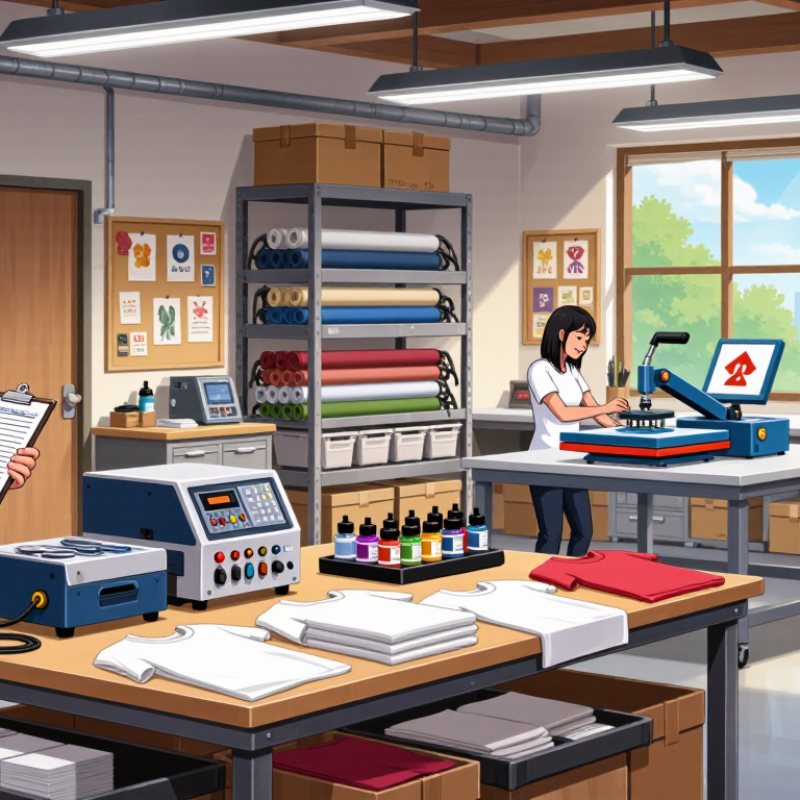
A custom T-shirt business needs a clear model before buying equipment. Choose between made-to-order printing, small batch production, or wholesale orders. Made-to-order work reduces unsold inventory but requires careful order tracking. Small batches improve production speed, yet they may leave you with unwanted designs.
Define your target market by observing real behavior, not guessing from age alone. A local sports club may value team names and fast delivery. New parents may prefer simple illustrations and soft fabrics. Ask potential customers about budget, sizes, colors, and buying occasions. Test three designs with a limited sample run. Record production time, material costs, printing quality, and customer feedback. My first audience choice might be too broad, and that is worth admitting early. A narrow market usually makes your message, pricing, and product decisions clearer.
Tips: Create one customer profile with specific details, such as a weekend runner aged 25 to 40 who buys event shirts twice yearly. Set a minimum order value for custom requests. Show fabric samples in natural light. Keep written approval for artwork, spelling, sizes, and quantities. Review returns and complaints every month. They reveal weak assumptions. Avoid promising delivery times until your supplier and printing workflow have been tested under busy conditions.
Define Your Custom T-Shirt Business Model and Target Market
Begin with research, not a machine purchase. Grand View Research estimates the global custom T-shirt printing market could expand at about 11% annually through 2030. That growth attracts competitors, but demand alone does not guarantee profit. Study local prices, sports clubs, schools, creators, and small companies. Record order quantities and artwork styles. My first budget would probably be wrong without this evidence. Use a spreadsheet to test selling prices, blank-shirt costs, packaging, rejected prints, labor, and delivery.
Choose equipment based on order volume. Screen printing suits larger batches and uses relatively low ink costs per item. Direct-to-garment printing handles detailed artwork but requires higher equipment investment and regular maintenance. Heat transfer works well for small orders and personalization. Embroidery is useful for heavier garments, although it is not ideal for large printed graphics. A practical pilot setup may cost approximately $3,000 to $8,000, including a press, curing equipment, initial materials, ventilation, and basic quality tools. The figure is only a working estimate.
Materials affect customer experience. Select cotton, polyester, or blended fabric after testing shrinkage, colorfastness, and print adhesion. Buy small quantities first. Mistakes become expensive quickly. The 2024 Global Textile Sustainability Report from Textile Exchange emphasizes rising attention to recycled fibers and traceability, so document material sources and care instructions. The International Organization for Standardization also stresses consistent quality systems; measure print placement, wash resistance, and color variation for every production batch. A simple sample-wash test can reveal failures before customers do.
A strong custom T-shirt business starts with focused design decisions. Choose one clear audience, such as hikers, local artists, or pet owners. Study their language, colors, and daily interests before drawing. Create simple sketches, then refine them into clean, printable artwork. Use high-resolution files and check every design on a realistic shirt mockup. Fabric changes how colors appear. Test a small sample before listing products online.
Set prices from real costs, not guesses. Record the blank shirt, printing, labor, packaging, payment fees, delivery materials, and possible waste. Then add a profit margin that supports future samples and customer service. Compare similar products, but avoid copying their prices blindly. A low price can attract attention, yet it may leave no money for quality control. Review your figures monthly.
Your brand identity should feel consistent across designs, product photos, packaging, and customer messages. Select a limited color palette and two readable type styles. Use a short, honest story explaining what your designs represent.
My early concepts were too crowded, and some colors looked dull after printing.
That mistake taught me to value white space and physical testing. Keep records of customer feedback, return reasons, and popular sizes. Let evidence guide changes, while leaving room for creative risks.
A custom T-shirt business needs a repeatable production system. Start with a dependable heat press, suitable printing equipment, curing tools, and a clean workspace. Test fabric types before accepting large orders. Cotton, blends, and heavyweight shirts absorb ink differently. Start small. Record temperature, pressure, and pressing time for every test.
Quality control
Quality control should happen before packing. Check artwork alignment with a simple measurement guide. Inspect seams, stains, color accuracy, and print adhesion under bright light. Wash test samples several times. A design may look excellent on day one and crack after washing. Keep a sample from each production batch. My early mistake was trusting visual inspection alone. A wash test would have revealed the problem sooner.
Choose sales channels that match your capacity. A simple website can display sizes, colors, prices, and delivery estimates. Social media can show close-up print details and customer-approved photos. Local events may provide useful feedback, but they can create unpredictable demand. Set realistic order limits during busy periods. Use an order sheet with customer details, artwork approval, garment size, quantity, and deadline. Pack each order with a final checklist. Fold shirts carefully, protect printed surfaces, and verify the shipping address twice. Delays often come from missing information, not production speed. Keep improving the workflow.
A custom T-shirt printing business grows through clear promotion and dependable customer service. Define a focused audience, such as local clubs, small companies, school groups, or event organizers. Show real product photos with close views of fabric, ink coverage, stitching, and packaging. Short videos can demonstrate the printing process and build trust. Keep pricing visible, including artwork preparation, delivery, and revision fees. Hidden costs quickly damage credibility.
Customer management should feel organized, not rushed. Record each inquiry, preferred size range, print location, deadline, and approval status. Send a simple digital proof before production begins. Ask customers to confirm spelling, colors, quantities, and delivery details. One missed detail can waste an entire order. I once treated fast replies as good service, but accurate replies mattered more. A shared order sheet, calendar reminders, and labeled sample files can prevent avoidable mistakes. Keep communication polite when customers change designs repeatedly, while setting a reasonable revision limit.
Growth requires controlled testing. Track which promotions create qualified inquiries, not just likes. Compare profit margins by order size, garment type, and printing method. Begin with manageable batches before purchasing expensive equipment or accepting large deadlines. Build relationships with reliable material suppliers and maintain a small sample inventory. Review complaints every month. Some problems will expose weak processes rather than difficult customers. Improve one step at a time, and leave enough production capacity for urgent corrections.
Made-to-order printing reduces unsold stock. Small batches can speed production. Wholesale orders need stronger planning. Track every order carefully.
Watch real buying behavior instead of relying only on age. A sports club may need names and quick delivery. New parents may prefer soft fabric and simple drawings. My first audience choice might be too broad.
Produce three designs in a limited sample run. Record material costs, production time, print quality, and customer comments. A small test exposes weak ideas early.
Get written approval for artwork, spelling, sizes, colors, quantities, and deadlines. Keep the approval with the order sheet. This prevents avoidable disputes.
Use a dependable heat press, suitable printing equipment, and curing tools. Keep the workspace clean and organized. Start small. Test every fabric type before accepting large orders.
Record temperature, pressure, and pressing time for each test. Measure artwork alignment with a simple guide. Check seams, stains, colors, and print adhesion under bright light.
A shirt can look perfect on day one and crack after washing. Wash samples several times before selling large quantities. My early mistake was trusting appearance alone.
Use a final checklist before packing. Confirm the design, size, quantity, and shipping address twice. Fold shirts carefully and protect printed surfaces. Missing information often causes delays.
Learning how to start a custom t shirt printing business begins with choosing a clear business model and identifying the customers you want to serve. Decide whether you will create made-to-order products, sell original collections, or provide printing services for organizations and events. Research suitable printing methods, equipment, materials, workspace needs, and startup costs before making any investment. This preparation will help you select practical tools and build a realistic budget.
Next, develop appealing designs, calculate prices that cover production and operating expenses, and create a consistent brand identity. Establish an organized production process with quality checks for fabric, print clarity, sizing, and packaging. Set up convenient sales channels, reliable order fulfillment, and clear customer service procedures. Promote your products through useful content, community engagement, and targeted campaigns while tracking sales and customer feedback. As demand grows, improve workflow, expand your product range carefully, and manage finances and inventory so the business can develop steadily.

Colvanta Print