Direct-to-Garment (DTG) printing is revolutionizing the printing industry. This method allows for precise designs with vibrant colors, making it different from traditional printing. John Smith, a recognized expert in garment printing, explains, “DTG printing offers unmatched design flexibility that traditional methods simply can’t achieve.” This new technology opens doors for small businesses and individual artists.
Understanding “what is DTG printing and how is it different” is crucial for anyone in the fashion and printing industries. Unlike traditional techniques, DTG prints directly onto fabric, eliminating the need for screens or large setups. This leads to faster turnarounds for custom orders. Details matter in fashion, and DTG captures intricate designs flawlessly.
However, DTG is not without challenges. The initial costs can be high, and not all fabrics yield the same results. Print longevity is another concern; colors may fade over time. Still, the potential for creativity and customization makes DTG an exciting alternative. As the industry evolves, grappling with these issues will shape its future.
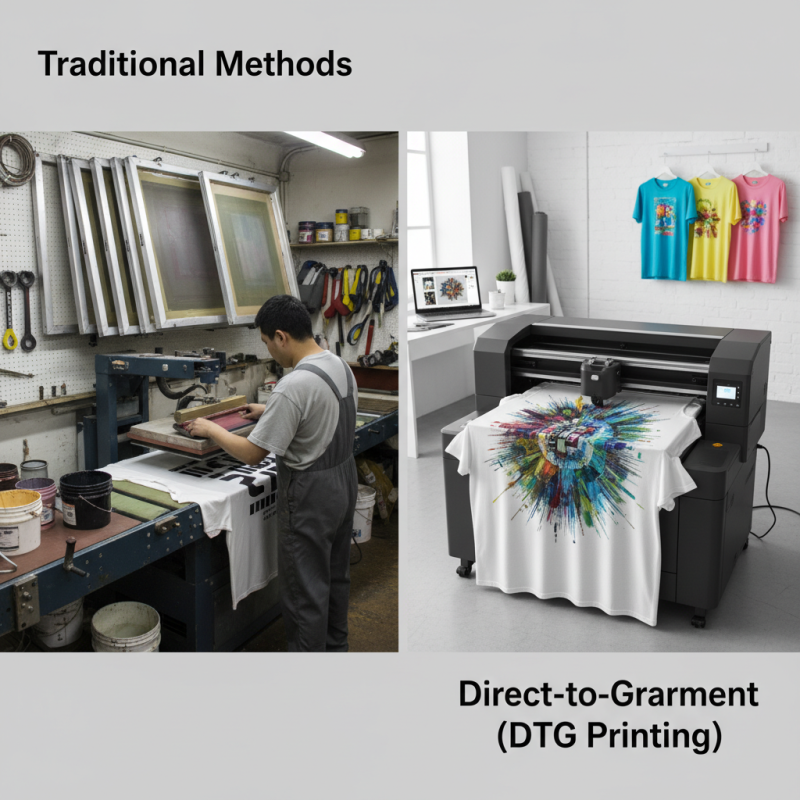
When comparing DTG (Direct to Garment) printing with traditional methods, the differences stand out prominently. Traditional techniques like screen printing involve multiple steps. These steps often include creating screens for each color. This process can be time-consuming and less flexible for intricate designs. In contrast, DTG allows for full-color prints directly onto fabric using specialized inkjet technology. This method works well for small batches, offering remarkable detail and personalization options.
Tips: If you’re considering DTG for your projects, focus on fabric type. Not all fabrics work equally well with inkjet methods. Cotton blends can yield better results. Also, consider the texture of your shirts. Some textures may absorb ink differently.
While DTG printing offers many advantages, it has limitations too. It may not be as cost-effective for large production runs when compared to screen printing. The durability of prints might vary, depending on the ink used and washing practices. Understanding these factors helps in making informed decisions. Make sure to weigh these pros and cons carefully before choosing your printing method.
Direct-to-Garment (DTG) printing technology represents a significant shift in the textile printing landscape. Unlike traditional methods, it utilizes inkjet technology to directly print designs onto fabric. This approach allows for unparalleled detail and color vibrancy. DTG printing can accommodate complex images, including gradients and fine lines. This technology is great for custom designs or small production runs.
One key aspect of DTG printing is its efficiency. It eliminates many steps found in traditional techniques, such as screen setup. This means reduced lead times and less material waste, which appeals to eco-conscious consumers. On the flip side, DTG may face challenges in scalability. Large runs can be less cost-effective compared to traditional screen printing. This raises questions about production capacity for high-demand items.
Nonetheless, DTG technology continues to evolve. Innovations in inks and printers are improving durability and wash resilience. However, the technology is not without its flaws. Some fabrics may not yield optimal results. It is crucial for businesses to assess their needs carefully. Understanding the limitations and strengths of DTG printing can lead to more informed decisions in apparel production.
DTG printing, or Direct-to-Garment printing, stands out for several important reasons. One key advantage is its ability to produce complex designs with vibrant colors. Unlike traditional methods, which require screens or plates, DTG uses digital technology. This allows for easy customization. Brands can quickly adapt designs for specific trends or client requests.
Tips: When considering DTG printing, assess your design's complexity. Simple designs often translate beautifully. However, overly intricate patterns may lose detail.
Another benefit of DTG printing is its minimal setup time. Traditional screen printing usually requires lengthy preparation. DTG skips this step entirely, making it ideal for small batches. Efficiency is crucial in today's fast-paced environment.
Tips: Always evaluate your order size. DTG is perfect for limited runs, while larger quantities may still benefit from traditional methods. Balancing your production needs is vital for cost-effectiveness.
Dependability plays a significant role in choosing the right printing method. DTG printers generally allow for consistent quality. However, they may require regular maintenance. Neglecting this can impact the quality of prints over time.
Tips: Schedule routine check-ups for your equipment to maintain the best quality. This proactive approach will ensure nice results for each project.
DTG printing, or direct-to-garment printing, has gained popularity for its ability to produce vibrant designs quickly. However, it faces several challenges and limitations that must be acknowledged. One significant issue is the cost of equipment. High-quality DTG printers can be expensive, which may deter small businesses or startups. Moreover, the maintenance of these machines can also add to operating costs.
Another limitation lies in the fabric compatibility. DTG printing works best on 100% cotton materials. This can be restrictive for companies wanting to print on blends or synthetic fabrics. Additionally, the washing durability of DTG prints may not always meet customer expectations. Some designs may fade or crack after repeated washes. This creates a need for quality control and testing, which can prolong the production process.
Ink consumption is another aspect worth considering. DTG printers use a considerable amount of ink, especially for large designs. This can lead to increased costs per item, particularly when producing bulk orders. Additionally, the drying time can slow down production speed. While DTG provides flexibility in design options, these challenges are essential to address for effective workflow management.
The printing industry is witnessing a significant shift towards Direct-to-Garment (DTG) techniques. DTG printing offers unique advantages over traditional methods. This technology allows for high-resolution prints with vibrant colors directly onto fabric. As a result, it is gaining traction among designers and businesses that value customization.
The rise of DTG techniques reflects changing consumer demands. Personalized designs are becoming more popular. Customers seek unique apparel that reflects their individuality. DTG's flexibility supports this trend perfectly. It enables small runs and one-off creations without impacting cost-effectiveness.
Tips for businesses considering DTG printing: start with high-quality images. Clear designs translate better onto fabric. Also, choose the right type of garment; not all fabrics work well with DTG. Testing different materials can lead to better results.
Another point to ponder is equipment investment. DTG printers can be costly. Regular maintenance is necessary to keep them running smoothly. Companies should weigh the benefits against the expenses. Smaller businesses may find significant financial commitment challenging. It requires careful planning and resource allocation.
| Dimension | DTG Printing | Traditional Methods |
|---|---|---|
| Printing Technique | Digital inkjet technology | Screen printing or transfer methods |
| Setup Cost | Lower for short runs | Higher due to screen setup |
| Production Speed | Quick for single items | Slower for small quantities |
| Color Variation | High color fidelity and detail | Limited to specific color palettes |
| Environmental Impact | Uses water-based inks | May involve hazardous materials |
| Customization | Easy customization for each order | Bulk production limits customization |
: DTG printing stands for Direct-to-Garment printing. It uses inkjet technology to print designs directly onto fabric.
DTG printing produces vibrant colors and complex designs. It allows easy customization without needing screens or plates.
Unlike traditional printing, DTG eliminates lengthy setup times. This makes it ideal for small production runs and quick adaptations.
Yes, DTG printing generally works best on 100% cotton. Using blends may lead to less optimal results.
DTG printers need regular maintenance to ensure quality. Neglecting this can lead to issues with print durability.
No, DTG may not be cost-effective for large runs. Traditional methods could offer better pricing for bulk orders.
Some DTG prints can fade or crack after multiple washes. Quality control is necessary to address durability issues.
DTG printers consume a significant amount of ink, especially for larger designs. This can increase costs for bulk items.
Yes, DTG excels at producing intricate designs. However, overly complex patterns may lose detail in the printing process.
Businesses must assess their needs and the types of fabrics they plan to use. Understanding limitations helps in decision-making.
DTG printing, or Direct-to-Garment printing, is a modern technique that differs significantly from traditional printing methods. Unlike conventional approaches that often involve screen printing or heat transfers, DTG uses specialized inkjet technology to print directly onto fabric. This not only allows for intricate designs and multicolored artwork but also minimizes waste and setup time, making it a more sustainable option for custom apparel production.
However, while DTG printing boasts key advantages such as greater design flexibility and faster turnaround times, it also faces challenges including limitations in fabric compatibility and production speed for large orders. As the industry evolves, there is a notable shift towards DTG techniques, driven by advancements in printing technology and increasing demand for personalized items. This transition highlights ongoing changes in the printing landscape, underscoring why it's essential to understand what is DTG printing and how it is different from traditional methods.

Colvanta Print