Direct-to-garment (DTG) printing has revolutionized the textile industry. Many businesses wonder, "can DTG print on all fabrics?" This question is important as the market for digital fabric printing is projected to reach $5 billion by 2027, according to a recent Grand View Research report.
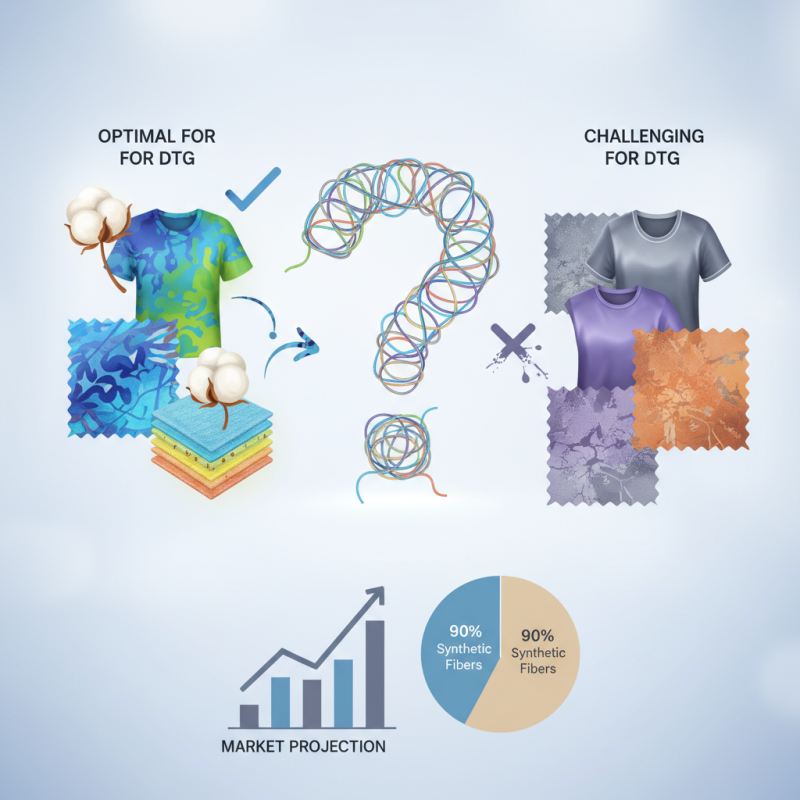
DTG technology offers vibrant colors and intricate designs. However, it is not universally compatible with all fabric types. For optimal results, DTG printers work best on cotton and cotton-blend fabrics. However, some synthetic materials can pose challenges. A study by Smithers Pira revealed that 90% of clothing items are made from synthetic fibers, highlighting the importance of knowing fabric compatibility.
Printing on polyester and blends may require special treatments. Additionally, the ink adherence and wash durability can vary. While DTG is a fantastic solution for many applications, there are limitations. Businesses must weigh these factors when considering DTG as their primary printing method.
Understanding DTG Printing Technology and Its Mechanism
Direct-to-Garment (DTG) printing has gained popularity in the textile industry. This technology allows high-quality designs to be printed directly onto fabric. It employs inkjet technology to apply ink on the fabric, offering vibrant colors and detailed imagery. A recent industry report noted that the DTG printing market is expected to grow at a compound annual growth rate of 25% from 2022 to 2030. This growth can be attributed to its versatility and ability to produce customized apparel quickly.
Understanding the mechanics of DTG printing reveals its nuances. The process requires pre-treatment for some fabrics, ensuring the ink adheres properly. Cotton is the most compatible fabric. However, DTG struggles with materials like polyester unless specially formulated inks are used. A study highlighted that over 40% of businesses faced challenges adapting DTG technology for various fabrics. This points to a limitation in its application. Companies must consider fabric type carefully when choosing DTG to guarantee quality results, particularly when targeting diverse customer needs.
The DTG process involves several stages, including the pretreatment of fabrics, printing, and curing. Each step influences the final product's durability and washability. Reports indicate that poor adherence can result in fading after just a few washes. Hence, understanding these intricacies is crucial for businesses. While DTG offers exciting possibilities, there are ongoing challenges that need reflection and improvement.
Exploring Compatible Fabrics for DTG Printing
Direct-to-Garment (DTG) printing is a popular choice for custom apparel. However, not all fabrics are suitable for this technique. Understanding fabric compatibility is crucial. Cotton is the go-to fabric for DTG printing. According to industry reports, 100% cotton garments produce the best results, retaining vibrant colors and fine details. The print quality on cotton blends is decent, but pure cotton remains the gold standard.
Polyester and synthetic fabrics present challenges. They require special inks and pre-treatments for optimal adhesion. Industry studies indicate that DTG prints on polyester may lead to fading over time. The prints often lack the same depth and richness as those on cotton. Moreover, mixed fabrics can yield inconsistent results, impacting overall quality. This reflects the need for a careful selection of materials in the DTG process.
Despite technological advancements, issues persist in achieving perfect prints. Sometimes, darker fabrics might absorb color differently, causing unexpected outcomes. The need for pre-treatment can also complicate workflows, particularly in high-volume settings. For reliable results, a thorough understanding of fabric behavior when subjected to DTG processes is essential. As the market evolves, continuous research is necessary to address these ongoing challenges in fabric compatibility.
Can DTG Print on All Fabrics? Exploring Compatible Fabrics for DTG Printing
| Fabric Type |
Compatibility with DTG |
Print Quality |
Durability |
Recommended Treatment |
| Cotton |
Excellent |
High |
Very Durable |
Pre-treat recommended |
| Polyester |
Good |
Medium |
Durable |
Pre-treat recommended |
| Blends (Cotton/Polyester) |
Very Good |
High |
Very Durable |
Pre-treat recommended |
| Nylon |
Fair |
Medium |
Moderately Durable |
Pre-treat recommended |
| Linen |
Good |
High |
Durable |
Pre-treat recommended |
| Rayon |
Poor |
Low |
Low Durability |
Not recommended |
Advantages of DTG Printing Over Traditional Methods
DTG (Direct-to-Garment) printing has emerged as a game changer in the textile industry. It offers significant advantages over traditional screen printing methods. Unlike screen printing, which requires multiple screens for each color, DTG printing uses a digital printer to apply ink directly onto fabric. This process reduces setup time and allows for intricate designs with multiple colors.
A recent report from the Custom Apparel Market states that DTG printing can save 30-50% in production costs for small runs. This makes it ideal for custom prints and on-demand production. The ability to print designs directly from a digital file also means less waste. Studies indicate that this method produces 80% less textile waste compared to traditional methods.
However, DTG printing isn't without its challenges. Not all fabrics yield the same quality. For instance, cotton absorbs ink better than polyester. This variability can lead to inconsistency in the final product. Additionally, some DTG printers can struggle with color vibrancy on dark fabrics. These factors introduce a level of scrutiny that businesses must address. Understanding fabric compatibility is crucial for achieving desired results.
Limitations and Challenges of DTG Printing on Various Fabrics
Direct-to-Garment (DTG) printing has revolutionized the textile industry. It allows for stunning and vibrant prints on fabric. However, it is not universally applicable to all types of materials. The limitations and challenges of DTG printing are significant and need to be understood.
Certain fabrics present issues for DTG printing. For instance, highly synthetic materials like polyester can repel ink, leading to poor results. This hinders the print quality and durability. Additionally, fabrics that are too textured or have unusual weaves may not allow for even ink application. It is essential to choose the right fabric to ensure optimal printing results.
Moreover, pre-treatment processes can be challenging. Each fabric may require a specific pre-treatment solution to ensure ink adhesion. This process can increase production time and costs. If not done correctly, the prints may fade or crack over time. These challenges highlight the importance of experimenting and testing various fabrics before committing to a larger production. Remember, not every fabric is suitable for DTG printing, and understanding these limitations is key to achieving the best results.
Evaluating DTG as the Optimal Printing Solution for Diverse Textiles
Direct-to-Garment (DTG) printing offers a versatile solution for many fabric types. However, not all fabrics are created equal. While DTG excels on cotton, the results can vary significantly on synthetic materials. This variation can impact vibrancy and durability. Understanding the fabric's characteristics is essential for achieving the best results.
When printing on various textiles, consider the fabric's composition. Cotton blends often yield better results than 100% polyester. The ink adheres differently, affecting the final appearance. Test samples on different fabrics to determine compatibility. It’s worthwhile to keep an eye on how colors look once printed, particularly on darker fabrics.
Tips: Always pre-treat the fabric for optimal ink adhesion. This helps avoid dull prints. Also, review care instructions to maintain the quality of printed designs. Regularly inspect your equipment to ensure consistent performance. Each printer might behave differently, requiring ongoing adjustments. This process may seem cumbersome, but careful attention can enhance your overall output.
Evaluation of DTG Printing on Various Fabrics
FAQS
: 100% cotton is the best fabric for DTG printing. It retains vibrant colors and fine details.
Polyester presents challenges. It may require special inks and pre-treatments for good adhesion.
Mixed fabrics can lead to varying ink absorption. This inconsistency affects print quality and appearance.
Pre-treatments can increase production time and costs. Incorrect pre-treatment may cause fading or cracking prints.
Dark fabrics might absorb colors differently. This can lead to unexpected results in print vibrancy and depth.
Test fabric samples first. This helps determine compatibility and expected outcomes before larger production runs.
Conclusion
DTG (Direct to Garment) printing is a revolutionary technology that allows for intricate designs to be printed directly onto fabric. However, the question often arises: can DTG print on all fabrics? While DTG printing works exceptionally well on cotton and other natural fibers, it does face limitations when it comes to synthetic fabrics like polyester. This article delves into the mechanism of DTG printing, exploring the types of fabrics compatible with this technology, as well as its advantages over traditional printing methods, such as quicker turnaround times and vibrant color reproduction.
Despite its many benefits, there are challenges associated with DTG printing, particularly concerning different fabric materials. Factors like ink absorption and the fabric's texture can significantly impact print quality. The evaluation of DTG as an optimal printing solution emphasizes its strengths and weaknesses, ultimately guiding users in choosing the right fabric for their specific printing needs.

 Colvanta Print