How long does dtf printing take? The honest answer depends on more than the printer’s speed. A job moves through artwork checks, film printing, powder application, curing, heat pressing, and cooling. A single shirt may be ready within minutes once the equipment is prepared. A larger order can take much longer, especially when designs need adjustment or garments require careful handling. Small orders move quickly. Usually.
The market is growing, but growth figures do not tell you how fast a shirt gets made. Grand View Research estimated the global digital textile printing market at about $2.7 billion in 2023 and forecast a 12.7% compound annual growth rate from 2024 to 2030. That report describes market expansion, not DTF turnaround times. It is useful context, not a stopwatch. For a practical estimate, separate hands-on production time from setup, curing, pressing, and queue time. Also ask whether the quoted time covers one garment or a complete batch. A warm, freshly pressed shirt may still need time to cool before packing. And mistakes happen: a misaligned transfer or ink issue can add minutes—or require a reprint. This guide breaks down each production stage, explains what changes the timeline, and shows how to estimate a realistic turnaround for your order.
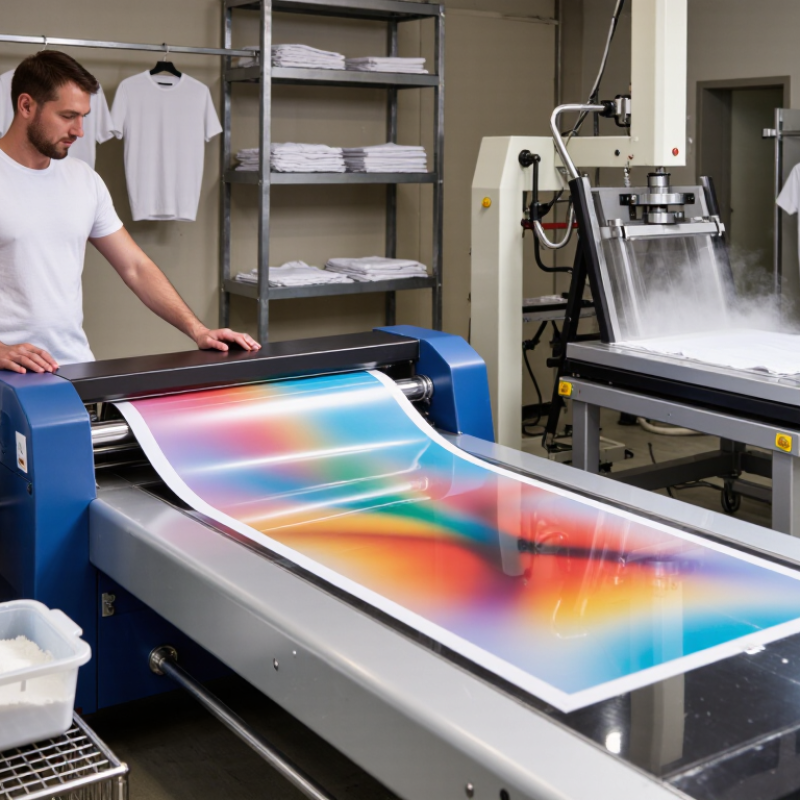
How Long Does DTF Printing Take?
A DTF job begins with artwork checks and RIP software setup. The operator sets color, print size, and a white-ink layer. Then the printer lays ink onto PET film. Powder adhesive is applied while the ink is wet, so it sticks evenly. A missed patch can leave a weak transfer. It happens.
The film then enters a curing unit, where heat melts the adhesive powder. Shop-floor timing often ranges from a few minutes for curing to roughly 10–15 seconds under a heat press; machine settings, film, and fabric change the figures. After pressing, the operator follows the film’s peel instructions and checks the print for edges that lift or small gaps. Setup, loading, and cooling also count, even though they rarely appear in a printer’s speed rating.
FESPA’s 2023 Print Census drew 1,778 respondents across 120 countries, offering a broad snapshot of print businesses, not a DTF cycle-time benchmark. That distinction matters. A single transfer may be ready quickly, while a batch waits on artwork approval, curing capacity, or garment changes. Estimates are imperfect; a test print on the actual fabric is a better guide than a stopwatch reading from one machine.
A small DTF job often spends 10–30 minutes in artwork preparation. This includes checking dimensions, cleaning transparent edges, and arranging the design for printing. Intricate artwork may take longer.
Printing can take roughly 5–20 minutes for a small batch, depending on image size, print settings, and equipment speed. Tiny details matter.
After printing, adhesive powder is applied and excess powder is removed, usually within 5–10 minutes.
Curing commonly takes another 2–5 minutes, but the correct time depends on the film, ink, and curing equipment. Follow the material supplier’s instructions; guessing at heat can leave a transfer tacky or brittle.
I’ve seen rushed curing create avoidable rework.
For each garment, heat pressing may take about 10–20 seconds, while positioning, peeling, and handling can add one to three minutes. A batch of ten shirts therefore takes longer than ten press cycles alone.
Allow time for setup and a final check for misplaced designs, uneven edges, or weak adhesion. A written timing log helps, though estimates still need adjustment when artwork or materials change.
DTF printing time depends on more than the printer’s speed. Artwork may need resizing, color correction, or a test print before production begins. Large designs with dense color coverage can take longer to print than simple lettering. Even a small alignment issue can mean starting again. Small details matter.
After printing, adhesive powder must be applied evenly and cured with controlled heat. The transfer then needs cooling before it can be pressed onto a garment. Pressing time varies with fabric type, transfer size, and the required temperature. A batch of shirts may save setup time, but each garment still needs careful positioning. Printer maintenance, ink flow, and an existing job queue also affect the final wait. There is no perfectly fixed estimate; rushing setup can create more work later.
Tips: Send print-ready artwork and confirm the garment count early. Ask whether the estimate includes curing and pressing, not just printing. Leave extra time for test prints or adjustments. It is easy to overlook those.
How to Estimate the Turnaround Time for a DTF Order
A useful estimate separates production time from delivery time. DTF production may include file review, scheduling, printing, powder application, curing, cutting, and packing. The printer may run quickly, but the order can still wait in a queue. Small orders move faster. Larger batches may need several print runs, especially when artwork needs edits or comes in different dimensions. Ask whether the quoted date means “ready to ship” or arrival at your address.
To get a realistic timeframe, share the transfer size, quantity, artwork status, and required delivery date when requesting a quote. Confirm that the files are print-ready; a missing transparent background or low-resolution image can delay approval. Ask how many business days are needed for production, when the clock starts, and whether weekends are excluded. Then check the carrier estimate separately. One weak spot in any estimate is assuming every stage proceeds without a pause. It may not. Leave a few working days of buffer for busy periods, file corrections, or shipping delays, and request an update if the promised production date passes.
DTF printing often feels faster than screen printing for small, varied orders because each design can be printed without preparing a separate screen. A simple transfer may take only minutes to print and cure, then seconds to press onto a garment. The clock also includes setup, loading film, applying adhesive powder, and checking the finished transfer. Small details matter.
Screen printing can take longer to prepare, especially when a design uses several colors. Once screens are ready, though, a large batch can move quickly. Direct-to-garment printing skips film and powder, but pretreatment and drying can add time. Heat-transfer vinyl may suit a single name or number, yet cutting and weeding tiny shapes can be slow. Sublimation is quick for compatible light-colored polyester, but fabric choice limits its use.
For a short run with changing artwork, DTF can offer a practical middle ground. For hundreds of identical shirts, screen printing may be faster overall after setup. Actual timing varies with artwork, garment type, equipment, and operator experience. A shop’s quoted production time may not include design checks or curing. I’ve found that estimates can look neat on paper, then slip when a transfer needs reprinting. That part is easy to overlook.
A small job often needs 10–30 minutes for sizing, edge cleanup, and layout. Intricate artwork can take longer.
A small batch often takes 5–20 minutes. Large designs with dense color coverage may take longer. Tiny details matter.
Powder application and cleanup usually take 5–10 minutes. Curing often takes 2–5 minutes, depending on materials and equipment. Guessing at heat can cause rework.
Pressing may take 10–20 seconds per garment. Positioning, peeling, and handling can add one to three minutes.
No. Setup and careful placement add time. A final check for uneven edges or weak adhesion is useful, too.
Artwork edits, test prints, printer maintenance, and job queues can delay production. A small alignment problem may mean starting again.
Share the transfer size, quantity, artwork status, and required date. Ask how many business days production needs and when the timing starts.
Not always. Confirm whether the date means “ready to ship” or arrival, then check the carrier estimate separately. I would leave a few working days of buffer; estimates can miss pauses.
Understanding how long does dtf printing take starts with the full production process: preparing the artwork, printing it onto film, applying adhesive powder, curing the transfer, and completing any required quality checks. Each stage adds time, while order size and workflow efficiency influence how quickly the finished transfers are ready.
Turnaround can vary depending on design complexity, print volume, equipment, staffing, and whether the order needs extra finishing or shipping. To estimate a DTF order, consider both production time and delivery time, and allow for possible delays during busy periods. Compared with methods such as screen printing or direct-to-garment printing, DTF can be practical for different order sizes and designs, but the fastest option depends on the job’s specific requirements.

Colvanta Print