Why is DTF Printing Gaining Popularity in 2026?

Time:2026-05-09 Author:Mason
0%

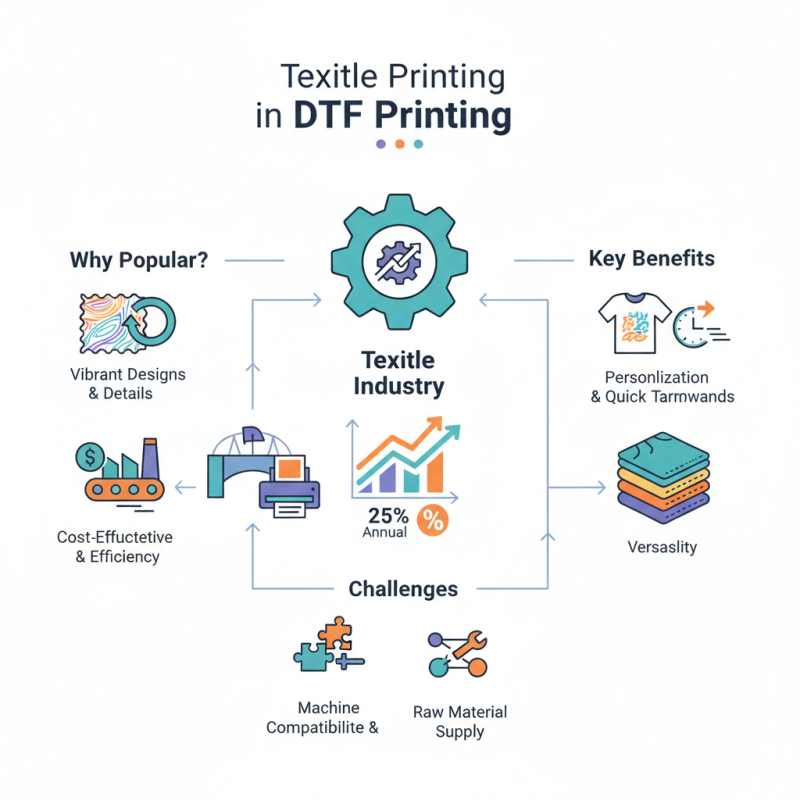
DTF printing is taking the textile industry by storm in 2026. Companies are adopting this technology at an unprecedented rate. According to a recent report by Smith Market Research, the DTF printing market is projected to grow by 25% annually. This growth is fueled by its versatility and cost-effectiveness. Industry expert Dr. Emily Chen notes, “DTF printing bridges the gap between traditional and digital printing methods.”

Why is DTF printing becoming popular? One reason is its ability to print vibrant designs with intricate details on various fabrics. Businesses appreciate DTF's efficiency. It eliminates the need for screens and costly setups, making it accessible for small and large enterprises alike. However, challenges remain. The quality of the final print can be inconsistent without proper calibration and materials.

Additionally, consumers are increasingly looking for personalized and custom products. DTF printing excels in this area, allowing for quick turnarounds. Yet, not all companies have adopted this technology seamlessly. Some struggle with machine compatibility and raw material supply. As the industry evolves, addressing these issues will be crucial for sustained growth.
Why is DTF Printing Gaining Popularity in 2026?

The Evolution of DTF Printing Technology Over the Years

DTF printing technology has evolved significantly over the years. Initially, it focused mainly on basic designs and lacked versatility. However, advancements have led to better print resolution and color accuracy. Today, DTF printing offers a wide range of applications, from apparel to home decor.

One important aspect of this evolution is the printing process itself. Early DTF printers were slow and cumbersome. They required extensive manual adjustments. Modern machines are more user-friendly and efficient. They come equipped with automated features that reduce errors. This improvement encourages greater adoption among small and medium businesses.

Tips for beginners: Start with quality inks and films. Experiment with different settings to find what works best. Use proper care techniques to maintain your printer. Remember, practice is key to mastering this technology. As DTF printing continues to grow, ongoing learning will be essential for staying competitive. The possibilities are vast, and innovation is always just around the corner.

Why is DTF Printing Gaining Popularity in 2026?

Year Market Size (Million $) Growth Rate (%) Key Innovations
2020 50 15 Initial DTF Ink Formulation
2021 100 100 First Commercial Printers
2022 180 80 Enhanced Adhesion Techniques
2023 300 66.67 Eco-Friendly Inks Development
2024 500 66.67 Speed Improvements in Printing
2025 800 60 High Precision Technology
2026 1300 62.5 AI-Driven Design Software

Key Advantages of DTF Printing Compared to Traditional Methods

DTF printing, or Direct-to-Film printing, is quickly emerging as a favored method in the textile industry. One key advantage is its ability to print on various materials. Unlike traditional methods, DTF allows printing on cotton, polyester, and blends without additional preparation. This versatility opens up many creative possibilities.

Moreover, the quality of prints is impressive. DTF produces vibrant colors and fine details that can often overshadow traditional screen printing. The durability is another significant factor. The prints resist cracking and fading over time, making them long-lasting.

Cost-effectiveness is also notable. DTF printing requires less setup time and fewer materials. This can lead to lower production costs, especially for small runs and custom designs. However, the technology is relatively new, and users may encounter challenges while mastering it. Continuous learning and adaptation are crucial for businesses to fully realize its benefits.

Market Trends Driving DTF Printing Popularity in 2026

The world of printing is evolving. In 2026, Direct to Film (DTF) printing is rapidly gaining traction. Recent industry reports indicate that the market is projected to grow by over 25% annually. This acceleration is largely driven by the demand for high-quality, versatile printing solutions. Brands are looking for ways to differentiate themselves. DTF printing offers vibrant colors and durable prints on various fabrics.

Consumer preferences are shifting towards personalized products. DTF printing allows for intricate designs and customization, catering to this trend. According to a recent survey, 78% of consumers prefer unique items over mass-produced goods. This desire for individuality influences brands to explore DTF technology. The ease of use and lower cost compared to traditional methods further fuels its popularity. Graphics can be printed quickly on films, ready for application within hours.

However, the industry faces challenges. The quality of DTF prints can vary. Not all inks and films offer the same durability or vibrancy. Brands must choose suppliers carefully to ensure consistency. As the market grows, the importance of reliable partnerships becomes evident. Industry experts emphasize the need for ongoing education and skill development to maximize DTF printing’s potential.

The Role of Customization in DTF Printing Demand

The customization aspect of DTF (direct-to-film) printing is crucial to its rising popularity in 2026. This technique allows businesses to create unique designs tailored to customer preferences. According to a report by ResearchAndMarkets, the global custom apparel market is expected to reach $10 billion by 2027. This trend is driven by consumers' desire for personalized products.

Customization enhances customer engagement and builds brand loyalty. With DTF printing, small businesses can provide a wide array of designs on demand. This adaptability is appealing in a fast-paced market environment. Recent surveys indicate that 67% of consumers prefer brands that offer personalized options. Meeting these expectations is essential.

Tips: Focus on quality when designing custom prints. Customers notice the difference. Consider offering samples of different materials to showcase options. Engaging with customers about their preferences can guide your design choices. Embrace feedback to improve and evolve your product offerings.

Why is DTF Printing Gaining Popularity in 2026?

Case Studies: Successful Applications of DTF Printing in Various Industries

DTF printing is making waves in multiple industries, showcasing its versatility and efficiency. In the fashion sector, small brands use DTF for custom designs. They create unique merchandise without heavy financial investment. This approach allows for rapid prototyping and experimentation with various graphics. However, some brands face challenges in achieving vibrant colors consistently. Each print requires careful calibration to maintain quality.

In the home decor market, DTF printing is transforming how consumers personalize their spaces. Companies offer customized wall art and textile designs. With this technology, customers can express their creativity. Yet, some users report issues with durability. Proper care is necessary to ensure the longevity of DTF items. Understanding that not every project will meet expectations is crucial.

Moreover, the promotional products industry is leveraging DTF's capabilities. Businesses produce eye-catching branded items that stand out. This can lead to increased visibility. Still, the learning curve exists for newcomers. Mastering the DTF printing process takes time and practice. Overall, the ongoing experiments with DTF highlight both its promise and potential pitfalls.

FAQS

: What has changed in DTF printing technology over the years?

: DTF printing has improved in resolution, color accuracy, and application versatility, unlike its initial basic designs.

What are some tips for beginners in DTF printing?

Use quality inks and films. Experiment with different settings. Maintain your printer properly. Practice is essential for mastering it.

How does DTF printing compare to traditional methods?

DTF printing allows for various materials and produces vibrant colors. It is also more cost-effective with shorter setup times.

Why is DTF printing becoming popular in 2026?

The market is expected to grow over 25% annually. Demand for high-quality and personalized printing drives this trend.

What challenges do businesses face with DTF printing?

Print quality can vary due to different inks and films. Ensuring consistency requires careful supplier selection.

How important is ongoing education in DTF printing?

Continuous learning is crucial to fully leverage DTF printing's advantages. Skill development helps businesses stay competitive.

Can DTF printing adapt to consumer preferences?

Yes, DTF printing caters to the demand for personalized products and intricate designs, reflecting consumer desires for uniqueness.

What should I consider about DTF print durability?

While DTF prints are durable, not all materials guarantee the same quality. Researching suppliers is vital for consistency.

Is DTF printing user-friendly?

Modern DTF printers feature automated functions, making them more user-friendly than earlier models that required frequent adjustments.

What can business owners do to succeed in DTF printing?

They should embrace ongoing learning, explore creative options, and focus on quality materials to enhance their printing capabilities.

Conclusion

DTF printing, or Direct-to-Film printing, is gaining popularity in 2026 due to its evolution in technology, which has significantly improved its efficiency and quality. Compared to traditional printing methods, DTF offers key advantages such as vibrant colors, greater durability, and the ability to print on a larger variety of fabrics, making it an attractive option for businesses.

Market trends are also fueling this rise; the demand for customization has increased, and DTF printing meets this need by enabling unique designs tailored to individual customer preferences. Additionally, successful case studies across various industries, ranging from fashion to promotional products, highlight the versatility and effectiveness of DTF printing. Overall, these factors answer the question of why is DTF printing becoming popular, showcasing its potential to reshape the print industry in the coming years.

Mason

Mason

Mason is a seasoned marketing professional with a deep expertise in the company's offerings and a passion for driving brand awareness. With a strong background in digital marketing strategies, he has an innate ability to connect with diverse audiences and effectively communicate product benefits.......