When navigating the complex world of textile printing, one question often arises: "when should you use DTF instead of DTG?" Industry expert Sarah Thompson, a seasoned professional in custom apparel production, emphasizes, "DTF offers flexibility that DTG simply cannot match."
Direct to Film (DTF) and Direct to Garment (DTG) printing methods serve different needs. DTF is gaining traction for its versatility, especially for designs that require vibrant colors on various fabric types. It allows for intricate details, making it ideal for custom orders. On the other hand, DTG excels with high-quality prints on cotton fabrics but might struggle with other materials.
Understanding when to use DTF offers a strategic advantage. Each method has strengths and weaknesses. Evaluating your specific project can lead to better outcomes. For print shops or businesses exploring custom designs, this choice can dictate efficiency and quality. Balancing cost, time, and fabric compatibility becomes essential in decision-making.
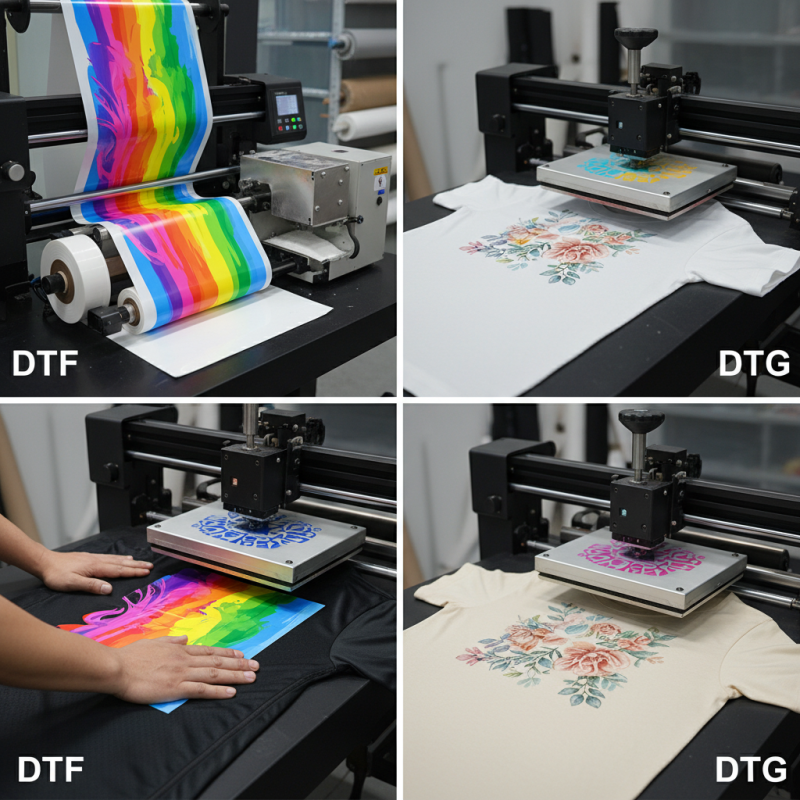
Understanding DTF and DTG Printing Methods
DTF (Direct to Film)
and
DTG (Direct to Garment)
printing methods are becoming increasingly popular in the textile industry. Understanding their unique features is essential for making informed decisions.
DTF printing involves transferring ink from a film to fabric using heat. This method can print on a wide variety of materials, making it versatile.
According to a study by Smithers Pira, the DTF market is expected to grow by 13% annually through 2025, underscoring its expanding role in garment production.
In contrast, DTG printing directly applies ink onto the fabric. It offers high-quality prints with vibrant colors and fine details. However, it generally works best on cotton fabrics. An industry report from ResearchAndMarkets indicates that the DTG printing market is projected to reach nearly $2 billion by 2024. This growth highlights its effectiveness in custom designs and small batches. Still, there are drawbacks, such as longer drying times and maintenance concerns.
Choosing between these methods depends on specific needs.
DTF provides flexibility in fabric choice, which can be beneficial for diverse clothing lines.
On the other hand,
DTG remains the go-to for high-detail and colorful prints on cotton garments.
Companies must weigh these factors against their production capabilities and clientele preferences.
The choice ultimately impacts quality, cost, and turnaround time.
Key Differences Between DTF and DTG Techniques
When considering printing methods, two popular techniques are DTF (Direct-to-Film) and DTG (Direct-to-Garment). Understanding their key differences is crucial for making the right choice for your needs.
DTF printing transfers ink from a film onto fabric using heat and pressure. This method is excellent for vibrant colors and detailed designs on various fabric types. A report from Smithers Group indicates DTF can produce up to 95% color accuracy, crucial for brands focusing on high-quality visual appeal. In contrast, DTG printing applies ink directly onto garment fabric, making it ideal for intricate designs and unlimited color palettes. However, DTG works best on cotton fabrics, limiting its versatility.
**Tip:** Assess the fabric type before confirming your method. If you’re printing on polyester or blends, DTF is likely the better choice.
The efficiency of each method can also vary. DTF typically requires less setup time, making it suitable for smaller runs. Nonetheless, DTG offers a realistic texture due to direct application, costing more time for setup. When speed is crucial, DTF becomes more favorable.
**Tip:** Consider print volume when selecting a method. For larger runs, the faster output of DTF can significantly reduce production time, but ensure you factor in long-term costs.
When to Choose DTF Over DTG for Your Printing Needs
Advantages of Choosing DTF for Specific Applications
Choosing DTF (Direct to Film) over DTG (Direct to Garment) can be advantageous for specific printing needs. DTF offers remarkable adherence to various fabric types, especially synthetic materials. According to industry reports, over 70% of users prefer DTF for materials like polyester, which often create challenges for DTG. This versatility makes DTF a solid choice for apparel that demands flexibility and durability.
DTF also boasts efficient production speeds. Data shows that print times for DTF can be 20-30% faster than DTG processes. This can significantly benefit businesses needing a high-volume output. The printing process with DTF allows for more vibrant colors, even when printing on dark fabrics. This was highlighted in a recent study, which reported that DTF prints maintain color integrity at a 95% success rate, compared to 82% for DTG on similar materials.
However, DTF is not without its challenges. Some users have noted issues with adhesive quality over time, affecting the longevity of prints. It's important to evaluate these factors based on individual project requirements. Careful consideration of fabric types, desired print quality, and production timelines is crucial in selecting the right method.
When to Opt for DTG: Benefits and Use Cases
When considering direct-to-garment (DTG) printing, it's essential to recognize its unique advantages. DTG is perfect for printing detailed designs with many colors. This method is excellent for short runs or one-off prints. The quality is high, with vibrant colors and intricate details. It works well on cotton fabrics, offering a comfortable feel.
Tips: Always test your fabric choice for DTG. Cotton absorbs ink better. Blends may not yield the same vibrancy. Remain flexible with your design. Sometimes, tweaking a design can enhance the final print.
DTG also shines in customization. If you want personalized items for events or gifts, DTG can deliver. As you explore your options, consider your order size. Large orders might lean towards traditional methods. A careful evaluation of your needs can lead to the best choice.
Tips: Use high-resolution images for DTG. A good design file makes all the difference. Don’t underestimate the power of print quality. Always ask for samples. Testing can reveal what works best for your vision.
When to Choose DTF Over DTG for Your Printing Needs
| Printing Method |
Best For |
Fabric Compatibility |
Print Durability |
Production Speed |
Cost Per Print |
| DTF (Direct to Film) |
Large orders, multi-color designs |
Cotton, polyester, blends |
High durability, wash-resistant |
Fast for larger runs |
Low to moderate |
| DTG (Direct to Garment) |
Personalized items, smaller batches |
Primarily cotton |
Excellent softness, lesser durability |
Slower for larger orders |
Moderate to high |
Factors to Consider When Selecting DTF or DTG for Projects
When selecting between DTF and DTG for your printing projects, several factors come into play. Each method has its strengths and weaknesses. DTF, or Direct to Film, is often more cost-effective for large runs. It can handle various fabrics, including polyester blends. This versatility makes it appealing for larger orders or mixed-material projects.
On the other hand, DTG, or Direct to Garment, excels in producing high-resolution prints. It's perfect for intricate designs with multiple colors. However, DTG is typically slower and can be more demanding in terms of machine maintenance. If you anticipate frequent maintenance, this might pose a challenge.
Consider your project’s specific needs. If you prioritize speed and cost, DTF might be the way to go. Conversely, for premium finishes and detailed artwork, DTG stands out. Balancing your priorities while acknowledging the limitations of each method is key to making the right choice for your printing needs.
Conclusion
When considering the best printing method for your projects, understanding the differences between Direct-to-Film (DTF) and Direct-to-Garment (DTG) is crucial. DTF is particularly advantageous for vibrant colors and versatility on various fabrics, making it suitable for designs requiring detail and texture. Conversely, DTG excels with cotton garments, providing soft prints with excellent detail for complex designs.
When should you use DTF instead of DTG? If you need to print on a wider range of materials or prioritize durability and color vibrancy, DTF is the preferred option. However, for high-quality prints on cotton apparel and when a soft feel is essential, opting for DTG may be more beneficial. Evaluating these factors can help ensure you select the right method for your specific printing needs.

 Colvanta Print