Can DTG Print on All Fabrics?

Time:2026-10-10 Author:Isabella
0%

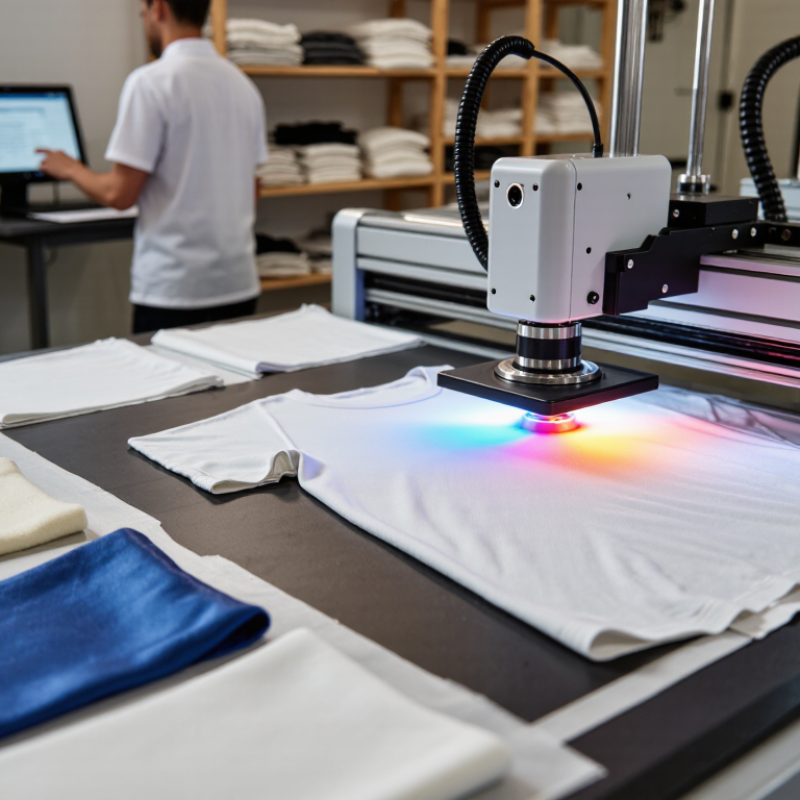
The question “can dtg print on all fabrics” sounds simple, but the honest answer is no. Direct-to-garment printing depends on fabric fiber, weave, color, and surface treatment. Cotton remains the most dependable choice because its fibers absorb water-based pigment ink effectively. A soft, tightly woven cotton shirt usually produces sharp edges and rich detail.

Other materials require caution. Polyester can accept DTG designs, but dye migration may cause unwanted color shifts after pressing or washing. Blends may print well when they contain enough cotton, yet results can vary between suppliers. Nylon, silk, wool, and coated textiles often need specialized inks, pretreatment, or another printing process. Some may resist ink completely.

Real production tests matter more than broad claims. A professional printer should examine the fabric label, test a small hidden area, and follow the ink manufacturer’s curing instructions. Pretreatment must be even. Too little can weaken the print, while too much can leave a stiff, pale patch. Dark garments also need white ink, which changes the hand feel and production time.

There is no universal fabric setting. Even two cotton shirts can behave differently. Humidity, fabric tension, and washing habits can affect the final image. DTG is powerful, but it is not magic. Choosing the right garment and documenting test results improves consistency. When the fabric is unsuitable, screen printing, sublimation, or direct-to-film printing may provide a more reliable finish.
Can DTG Print on All Fabrics?

Define DTG’s Best Substrate: 100% Cotton for Maximum Ink Absorption

Can DTG Print on All Fabrics?

DTG can print on many fabrics, but the substrate strongly controls the final result. In practical production, 100% cotton remains the most dependable surface for direct-to-garment ink. Its natural fibers absorb water-based ink evenly, helping colors settle into the fabric instead of sitting heavily above it. The print usually feels softer after curing.

Preparation still matters. A clean, tightly knitted cotton shirt gives the printer a more stable surface. Pretreatment helps white ink bond and prevents dark garments from looking weak. Too much pretreatment can create a stiff hand feel or a visible outline. Too little may cause dull colors and poor wash durability. Small changes matter.

Not every cotton garment performs identically. Ring-spun and combed cotton often produce smoother details, while rougher fabrics can soften fine text. I have seen attractive artwork lose sharp edges on loose, uneven fabric. That result is easy to blame on the printer, but the garment may be the real variable. Cotton blends can work, yet polyester fibers usually absorb less DTG ink and may require specialized handling. Test a blank garment first. Check the print after curing and several washes. A sample can reveal shrinkage, color shift, or cracking before a larger run. The best substrate is not always the cheapest one.

Compare Blended Fabrics: 50/50 Cotton-Polyester Requires Specialized Pretreatment

Can DTG Print on All Fabrics?

Direct-to-garment printing works best on cotton, but it can print on more fabrics with careful preparation. A 50/50 cotton-polyester shirt needs specialized pretreatment. Standard cotton pretreatment may leave the print dull, weak, or uneven.

Polyester fibers can resist ink absorption and encourage dye migration during curing. A dark shirt may develop a gray or colored haze beneath white ink. Specialized pretreatment helps improve adhesion and reduce this effect. Apply it evenly, not heavily. Excess liquid can create a stiff patch, while too little may reduce opacity.

The workflow needs control. Shake the pretreatment well, spray a measured layer, and dry the garment fully before printing. Use a heat press with protective paper, then follow a tested curing profile. Temperature, pressure, and dwell time can change the final texture. The shirt should feel dry, not tacky.

Test before production. Print a small white square and a detailed color sample. Check the surface after curing and washing. A 50/50 blend may look excellent before washing, then reveal poor adhesion afterward. That is an easy mistake. Fabric color, weave, and polyester content also affect results, even within the same garment style. Operators should record pretreatment volume, drying time, and wash performance for each fabric group. Some tests will fail, and that failure is useful evidence.

Evaluate Polyester Printing: Dye Migration Can Reduce Color Accuracy

Can DTG Print on All Fabrics?

Evaluate Polyester Printing: Dye Migration Can Reduce Color Accuracy

DTG can print on polyester, but the fabric is not a passive surface. Polyester contains disperse dyes that may move during heat curing. Excessive heat can pull red, blue, or yellow dye into white ink. The result is a gray cast, weak highlights, or inaccurate brand colors. That assumption is too simple.

Textile Exchange’s 2024 Materials Market Report recorded about 124 million tonnes of global fiber production in 2023. Polyester represented roughly 60% of that volume, making migration control increasingly important. Smithers’ digital textile printing analysis also forecasts strong market growth through 2027. More polyester garments will enter digital workflows. Yet growth does not remove chemistry risks.

A practical test should compare an untreated print with a controlled print. Record curing temperature, dwell time, fabric color, and ink coverage. Use a spectrophotometer to measure ΔE00 before and after curing. AATCC TM61 can help evaluate laundering changes, while crocking tests can reveal surface color transfer. Keep the heat window narrow. Too little heat can reduce durability. Too much heat can distort color.

Pretesting matters.

Black polyester can hide migration until white details turn pink. Dark navy fabric can create a colder, duller image. Pretreatment may improve adhesion, but it cannot guarantee color stability. Some operators still trust a successful first sample too quickly. That is a costly weakness. Recheck after washing, storage, and repeated production runs.

Adjust for Garment Color: Dark Fabrics Need White Ink and Pretreatment

Can DTG Print on All Fabrics?

Direct-to-garment printing works best on stable, absorbent fabrics, especially cotton-rich garments. It does not perform equally on every textile. Polyester, nylon, coated materials, and heavily textured knits can reduce ink bonding. The 2024 Textile Exchange Materials Market Report states that polyester represented about 57% of global fiber production in 2023, while cotton represented about 19%. That gap matters. A popular fiber is not automatically an easy DTG substrate.

Garment color changes the process. White fabric allows colored ink to sit directly on the surface. Dark fabric needs a white ink layer, or the artwork may look dull and weak. Pretreatment is equally important. It helps white ink hold to the fibers and improves wash durability. Too little pretreatment causes fading. Too much can create a stiff, gray rectangle. In production testing, curing temperature, pressure, and dwell time must match the fabric. Small errors show quickly. Sometimes the “best” setting still needs adjustment.

Tips: Test a fabric swatch before accepting a full order. Shake pretreatment evenly, then dry it completely. Use a color chart, wash-test samples, and inspect fine details under bright light. The AATCC Home Laundering Test Method 61 can support repeatable wash evaluations. Record fabric content, pretreatment volume, curing conditions, and wash results. Do not trust appearance alone. Dark garments often look excellent before washing, then reveal weak adhesion. Textile printing remains partly technical—and partly stubborn.

Can DTG Print on All Fabrics? Adjust for Garment Color

Light garments typically use colored ink without a white underbase, while dark garments require white ink to create opacity and preserve image colors. Pretreatment is generally required for both, with dark garments needing careful pretreatment to support the white-ink layer. Fabric composition and surface treatment still affect print performance, so synthetic or coated fabrics should be tested before production.

Verify Print Durability with AATCC 61 Wash Testing Before Production

Can DTG Print on All Fabrics?

Verify Print Durability with AATCC 61 Wash Testing Before Production

Direct-to-garment printing can produce vivid artwork, but it does not perform equally on every fabric. Cotton usually accepts water-based pigment ink well. Polyester, blends, dark textiles, and textured knits require different preparation. Fiber content, fabric color, pretreatment, drying, and curing can change the result. A soft first print may fade after repeated washing. It may also crack at stretch points.

Before production, test the exact garment construction, not a similar sample. Cut several printed swatches from the intended fabric. Record ink coverage, pretreatment volume, press temperature, dwell time, and cooling conditions. Then use an accredited textile laboratory or trained testing team for AATCC 61 laundering. This method accelerates washing exposure under controlled conditions. Inspect color change, edge lift, surface cracking, and staining on adjacent fabric. Photograph each stage under consistent lighting. Small details matter.

A passing result supports a production decision, but it is not a promise for every household. AATCC 61 does not reproduce every detergent, machine, or drying habit. Some fabrics shrink, distort, or become rough before the print fails. That matters. Repeat the test after adjustments, especially when artwork coverage or pretreatment changes. In practice, a useful report connects test data with the care label and expected wear. If results look acceptable but feel questionable, pause production. A cheaper run can become expensive rework.

Can DTG Print on All Fabrics? - Verify Print Durability with AATCC 61 Wash Testing Before Production

Fabric compatibility depends on fiber content, fabric color, surface construction, pretreatment, ink formulation, curing, and laundering conditions. Use accelerated wash testing to compare candidate materials before production.

Fabric Type Typical Fiber Content DTG Suitability Recommended Pretreatment Key Printing Considerations AATCC 61 Test Focus Production Decision
Combed or Ring-Spun Cotton 100% cotton Excellent Required for dark garments; usually beneficial for light garments High absorbency and a relatively smooth surface support strong ink adhesion and image detail. Excess lint can reduce print sharpness. Check color change, staining, cracking, and image loss after the selected accelerated laundering condition. Generally suitable after confirming pretreatment, curing, and wash results.
Cotton Jersey 100% cotton knit Excellent Use a controlled pretreatment amount and even heat curing Stretch and knit texture can affect edge sharpness. Excessive pretreatment may create a stiff hand or visible residue. Evaluate wash durability together with stretch recovery and cracking after laundering. Suitable when the print remains flexible and maintains acceptable appearance after testing.
Cotton/Polyester Blend Commonly 50/50 or other blended ratios Conditional Use a pretreatment and ink process validated for the specific blend ratio Lower cotton content can reduce absorption and adhesion. Polyester may contribute to dye migration, especially on dark or strongly dyed garments. Test for wash durability, staining, color change, and dye migration under the intended laundering condition. Approve only after testing the exact fabric color, blend ratio, and production settings.
Polyester 100% polyester Conditional Use a polyester-compatible process; standard cotton pretreatment may not be sufficient Low moisture absorbency and dye migration can reduce durability or discolor white areas. Fabric construction and dye chemistry strongly affect results. Prioritize crocking, staining, color change, dye migration, and adhesion after accelerated laundering. Use only after a documented process qualification on the exact garment construction.
Tri-Blend Knit Typically cotton, polyester, and rayon or a similar regenerated-cellulose fiber Conditional Optimize pretreatment quantity and curing temperature for the blended surface Different fibers absorb and react to heat differently. The soft, lightweight surface may show reduced opacity or increased cracking during stretch. Assess image retention, staining, surface cracking, and hand feel after laundering. Suitable for selected designs when wash results meet the product requirement.
Rayon or Viscose Regenerated cellulose fiber Conditional Use a low-residue process and confirm heat tolerance before production Fabric can be soft and drapey but may have lower dimensional stability. Excess heat, moisture, or pressure can affect the garment shape. Check color change, staining, dimensional change, print cracking, and distortion after laundering. Proceed only with validated temperature, pressure, and curing settings.
Linen 100% linen or linen-rich fabric Good to Conditional Use even pretreatment; account for the naturally textured surface Surface slubs and fiber irregularity may reduce fine-detail consistency. The fabric can have a firmer hand and greater wrinkling than cotton jersey. Evaluate print coverage, edge definition, staining, color change, and surface cracking. Suitable for compatible constructions after visual and wash-performance approval.
Nylon or Polyamide 100% nylon or polyamide blend Limited Requires a process specifically developed and validated for nylon Low absorbency, smooth surfaces, and fiber-specific chemistry can make adhesion difficult. Standard cotton DTG settings should not be assumed to work. Focus on adhesion, staining, color change, cracking, and print removal after laundering. Do not release for production without fabric-specific qualification testing.
Wool or Wool Blend Wool with natural or synthetic fibers Limited Requires low-impact handling and a process validated for the wool construction Hairy surfaces, moisture sensitivity, and heat sensitivity can reduce print definition and affect the garment during curing. Use a suitable laundering condition and inspect for felting, dimensional change, staining, adhesion loss, and surface damage. Generally not recommended for standard DTG production without specialized validation.
Silk 100% silk or silk blend Limited Requires a silk-compatible process and careful control of heat and moisture Delicate fibers and smooth surfaces may limit adhesion. Standard DTG curing and laundering conditions may be unsuitable for the garment. Evaluate adhesion, color change, staining, fabric damage, and dimensional stability using an appropriate care condition. Use alternative decoration methods unless a specialized process has been qualified.
Testing note: AATCC TM61 is an accelerated laundering test method used to evaluate colorfastness to repeated laundering under specified laboratory conditions. It is not a direct one-to-one prediction of a fixed number of household washes. For meaningful approval, test the exact fabric, garment color, pretreatment level, ink system, curing settings, print coverage, and intended care label. Record color change, staining, cracking, adhesion loss, dye migration, dimensional change, and hand feel before and after testing.

FAQS

Which fabric usually gives the most reliable direct-to-garment print?

100% cotton usually absorbs water-based ink evenly and produces a softer print after curing. Test it.

Can direct-to-garment printing work on polyester?

Yes, but polyester can release dye during heat curing. White details may turn gray, pink, or blue. Results can vary.

Why does garment color affect print quality?

White garments need no white ink foundation. Dark garments usually need white ink and pretreatment for brighter colors.

What happens when pretreatment is poorly applied?

Too little may cause dull colors and weak wash durability. Too much can create a stiff, gray rectangle.

Are all cotton garments equally suitable?

No. Ring-spun and combed cotton often show smoother details than loose, rough fabric. Fine text may lose sharp edges.

How should a fabric be tested before production?

Print a blank sample, cure it, and inspect it under bright light. Wash it several times and check shrinkage, fading, cracking, and color changes.

What curing problems can occur with polyester?

Excessive heat may increase dye migration and weaken color accuracy. Too little heat may reduce durability. The heat window is narrow.

Is the cheapest garment always the best substrate?

Not necessarily. A cheaper shirt may cause dull colors, rough details, or poor wash performance. Cost alone can mislead.

Which records help improve repeat production?

Record fabric content, garment color, pretreatment amount, curing temperature, dwell time, and wash results. Appearance alone is not enough.

Why can a successful first sample still be unreliable?

Some problems appear only after washing, storage, or repeated production. I would not trust one attractive sample too quickly.

Conclusion

Can DTG print on all fabrics? Not with the same level of quality or consistency. Direct-to-garment printing performs best on 100% cotton because its natural fibers absorb water-based ink effectively, producing bright colors and sharp details. Cotton-rich garments are generally the easiest to print, while 50/50 cotton-polyester blends may require specialized pretreatment and carefully adjusted settings to achieve reliable results.

Polyester and other synthetic fabrics present additional challenges, especially dye migration, which can affect color accuracy and make the design appear dull or discolored. Garment color also matters: dark fabrics typically need pretreatment and a white ink base to create a vibrant image. Before beginning full production, print providers should test the selected fabric, ink, and pretreatment combination, then verify durability through AATCC 61 wash testing. These steps help confirm color stability, adhesion, and long-term wear performance.

Isabella

Isabella

Isabella is a dedicated marketing professional with a sharp focus on driving brand growth and engagement through strategic content creation. With an extensive background in digital marketing, she combines her passion for storytelling with her keen understanding of industry trends to deliver......