In the evolving world of textile printing, the debate on "how does dtf printing compare to dtg printing" is increasingly relevant. Industry expert, Michael Johnson, recently stated, “DTF printing provides versatility that DTG often struggles to match.” This highlights a key consideration in choosing the right printing method.
DTF, or Direct to Film printing, allows applications on various fabrics. This method has gained traction, especially for custom designs. Drying time is generally faster with DTF. Meanwhile, DTG, or Direct to Garment printing, is known for its vibrant colors and intricate details. However, it works best on 100% cotton. The limitations on fabric types can be frustrating for designers.
Both methods have their pros and cons. DTF might be more cost-effective for bulk orders. Yet, DTG excels in quality for unique, detailed designs. The decision depends heavily on specific project needs. It is essential to weigh aspects like fabric choices, detail requirements, and production volume when deciding between the two. Each method deserves reflection and consideration based on individual circumstances.
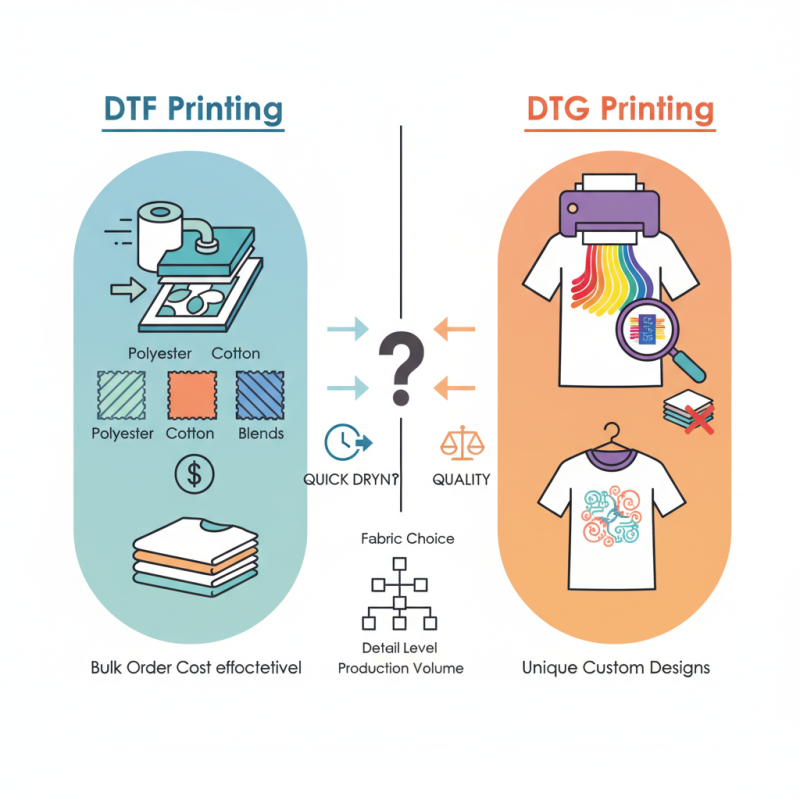
Overview of DTF and DTG Printing Techniques
DTF (Direct to Film) and DTG (Direct to Garment) printing are two popular techniques in the textile printing industry. Each has its own set of benefits and downsides. DTF printing involves printing designs onto a special film, which is then transferred onto fabric using heat. This method is known for its vibrant colors and ability to print on various materials. On the other hand, DTG printing directly applies the ink onto the fabric using a specialized inkjet printer. It excels in producing detailed images and is perfect for smaller runs.
When considering these methods, it's essential to evaluate your specific needs. DTF can be cost-effective for bulk orders and diverse substrates. DTG shines with high-quality, intricate designs, making it ideal for custom pieces. If you're experimenting, test both methods on similar designs to see which one meets your expectations.
Tip: Always consider fabric compatibility when choosing a printing method. Some inks may not adhere well to specific materials. Additionally, ensuring proper preparation of fabric can significantly impact the final print quality. Don't underestimate this step.
Keep in mind the maintenance of your printing equipment. Regular upkeep extends the lifespan of printers and can enhance print quality. Find a routine that works for you, but allow for adjustments based on your experience.
2026 Best DTF Printing vs DTG Printing: Comparison of Key Metrics
Comparison of Quality in DTF vs DTG Printing
When comparing DTF printing to DTG printing, quality stands out as a key factor.
DTF, or Direct to Film, offers vibrant colors and excellent detailing. It uses special inks that produce bright images on various fabrics. This process transfers images from a film to the garment. The results are often stunning, with colors that pop. However, there's a catch. The durability of the prints can vary based on the material used.
On the other hand, DTG, or Direct to Garment printing, delivers high-quality prints as well. It directly applies ink to the fabric, allowing for intricate designs.
DTG excels in softness and feel since the ink becomes part of the fabric. However, sometimes the colors may appear less vivid compared to DTF. Also, DTG can be slower and less efficient for bulk orders. Both methods have their strengths and weaknesses.
Ultimately, the choice between DTF and DTG boils down to specific needs. Consider factors like fabric type and design complexity. Experimenting with both methods could lead to insights about their unique qualities. Testing them in real-world applications can help reveal hidden inconsistencies and strengths.
Cost Analysis: DTF vs DTG Printing Methods
When comparing DTF (Direct to Film) and DTG (Direct to Garment) printing methods, cost is a critical factor. According to a recent industry report, DTG printing typically requires higher upfront investment in equipment. A high-quality DTG printer can range from $10,000 to $30,000. This does not include maintenance costs, which can also add up over time. In contrast, DTF printers can start from as low as $5,000, making them more accessible for small businesses and startups.
However, the cost of consumables also plays a role in the overall analysis. DTG printing uses specialized inks that can average around $0.15 to $0.30 per print. DTF transfers, while more affordable at approximately $0.05 to $0.10 each, require additional costs for the film and adhesive powder. This setup might seem cost-effective, but the additional steps can complicate production.
Another consideration is print durability and time efficiency. DTG prints have been observed to last longer, with studies suggesting they endure about 30% more washes before significant fading occurs. Nonetheless, DTF printing can produce vibrant colors on various fabrics, appealing to niche markets. As businesses weigh these factors, they must consider their specific needs, production volumes, and market demands. The choice between DTF and DTG printing is not black and white. Each method has its trade-offs that reflect in overall costs and customer satisfaction.
Application and Use Cases for DTF and DTG Printing
DTF printing, or Direct to Film printing, has gained popularity for its versatility. It's suitable for various fabrics such as cotton, polyester, and blends. The process involves printing designs directly onto a special film, which is then heat-pressed onto the garment. This method excels in producing vibrant colors and detailed images. However, there are concerns about durability. Some prints may fade after multiple washes, which can affect customer satisfaction.
On the other hand, DTG printing, or Direct to Garment printing, offers a different approach. It allows for high-resolution designs to be printed directly onto the fabric. This technique is ideal for intricate artwork and photographs. However, it's not always effective on all fabric types. DTG generally works best on 100% cotton, limiting its application. The longevity of DTG prints can also vary based on fabric and washing techniques.
Businesses must weigh these advantages and limitations carefully. The choice between DTF and DTG printing will depend on their specific needs. Understanding these details helps in making an informed decision about which printing method to use in their operations.
Future Trends in DTF and DTG Printing Technologies
DTF (Direct to Film) and DTG (Direct to Garment) printing technologies are rapidly evolving. Both methods cater to different needs in the printing industry. DTF is gaining traction for its versatility on various fabrics, including challenging materials. It allows for vibrant colors and detailed designs, making it appealing for a diverse range of applications. However, quality can vary significantly based on the film and transfer process used.
On the other hand, DTG is favored for its ability to reproduce high-resolution prints directly onto textiles. It excels with cotton fabrics, resulting in soft prints that feel like part of the garment. Yet, it can struggle with darker fabrics or complex designs, which may require additional treatments. As sustainability trends rise, both technologies face pressure to reduce waste and improve ink efficiency.
Future advancements might see DTF and DTG merging in some areas. Experimentation with new inks and materials could enhance durability and environmental impact. The shift towards automation may also streamline production. Nevertheless, the industry still grapples with pricing and scalability, raising questions about accessibility for smaller businesses. Both methods have their strengths but also present challenges that require ongoing reflection and adaptation.
2026 Best DTF Printing vs DTG Printing Which Is Better?
| Feature |
DTF Printing |
DTG Printing |
| Print Quality |
High quality, vibrant colors |
Good quality, softer feel |
| Material Compatibility |
Wide range of materials including cotton and blends |
Best on cotton and some blends |
| Setup Time |
Longer setup with pre-coating |
Less setup time, quick to start printing |
| Durability |
Very durable, feels like part of the fabric |
Durable, but can crack or fade over time |
| Cost |
Lower cost for bulk printing |
Higher cost per unit, better for small runs |
| Environmental Impact |
Uses less water and eco-friendly inks |
Uses more water and can have less eco-friendly inks |
| Ideal Use Cases |
High-volume orders and custom designs |
Small runs, personalized items |
FAQS
: DTF stands for Direct to Film printing. It involves printing designs onto film, then transferring them onto fabric with heat.
DTF printing produces vibrant colors and works well on various fabrics. It's cost-effective for bulk orders, too.
DTG means Direct to Garment printing. It applies ink directly onto fabric using specialized inkjet printers, allowing for detailed designs.
DTG printing typically works best on 100% cotton fabrics. It may struggle with other materials or complex designs.
Yes, DTF prints may fade after multiple washes, which could impact customer satisfaction over time.
Regular maintenance is vital for extending printer lifespans and improving print quality. Adjust your routine based on experience.
Yes, both DTF and DTG printing can cater to custom designs. DTF is more versatile, while DTG excels in high-resolution images.
Fabric compatibility is crucial; some inks do not adhere well. Properly prepared fabric significantly influences final print quality.
A push for sustainability and automation is noticeable. Advancements may improve durability and reduce waste in both methods.
Each method has strengths and weaknesses. Understanding your requirements helps in making the best decision for your projects.
Conclusion
In the exploration of "how does DTF printing compare to DTG printing," both techniques reveal unique advantages and limitations. DTF (Direct to Film) printing offers versatility with a wider variety of fabric compatibility and can produce vibrant prints on dark textiles, while DTG (Direct to Garment) printing excels in detailed color reproduction and is ideal for lighter fabrics.
When analyzing cost, DTF can prove to be more economical for larger runs, while DTG often involves higher initial expenses due to equipment and ink. Application-wise, DTF is increasingly favored for custom designs and bulk orders, whereas DTG remains a popular choice for small batches and intricate artwork. Looking ahead, advancements in both DTF and DTG technologies promise to enhance quality, efficiency, and sustainability, continuing to evolve the landscape of textile printing.

 Colvanta Print